
 Whole-home duct cleaning
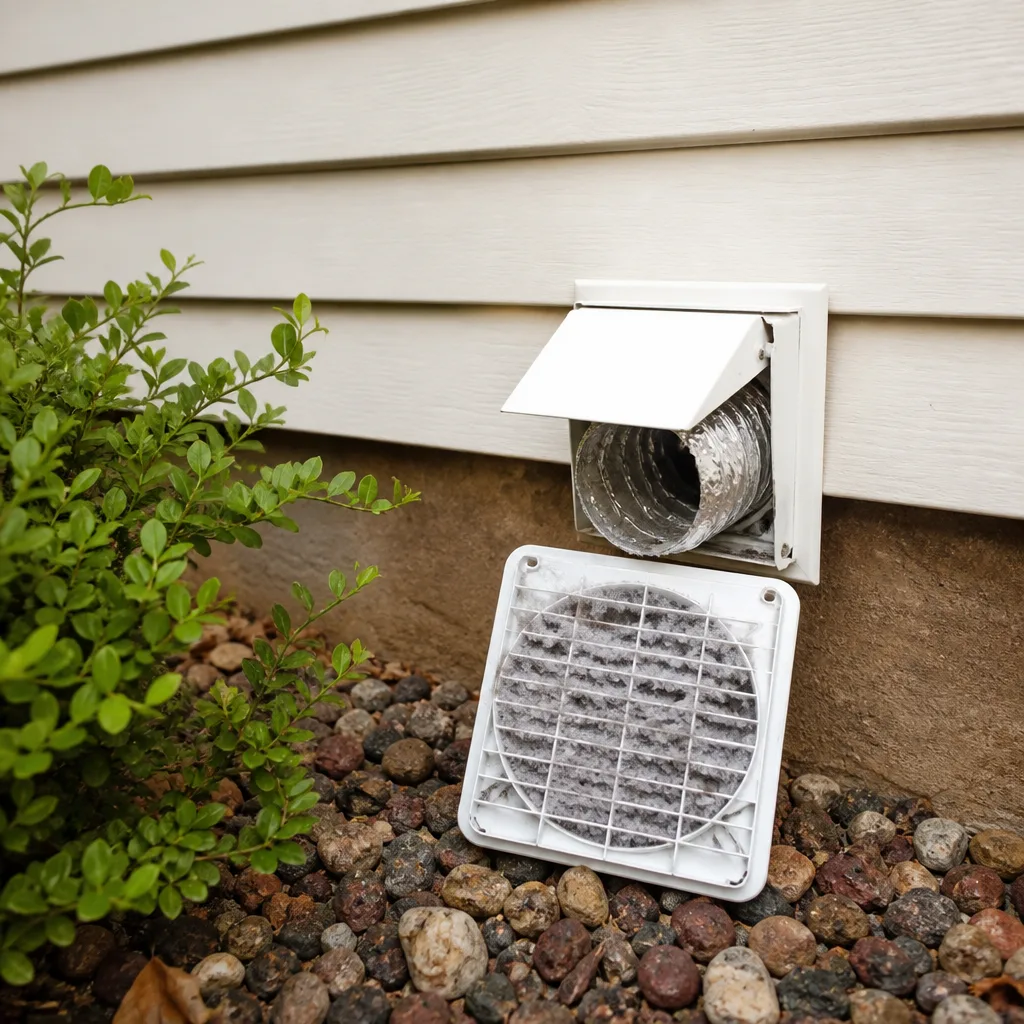 Dryer vent cleaning
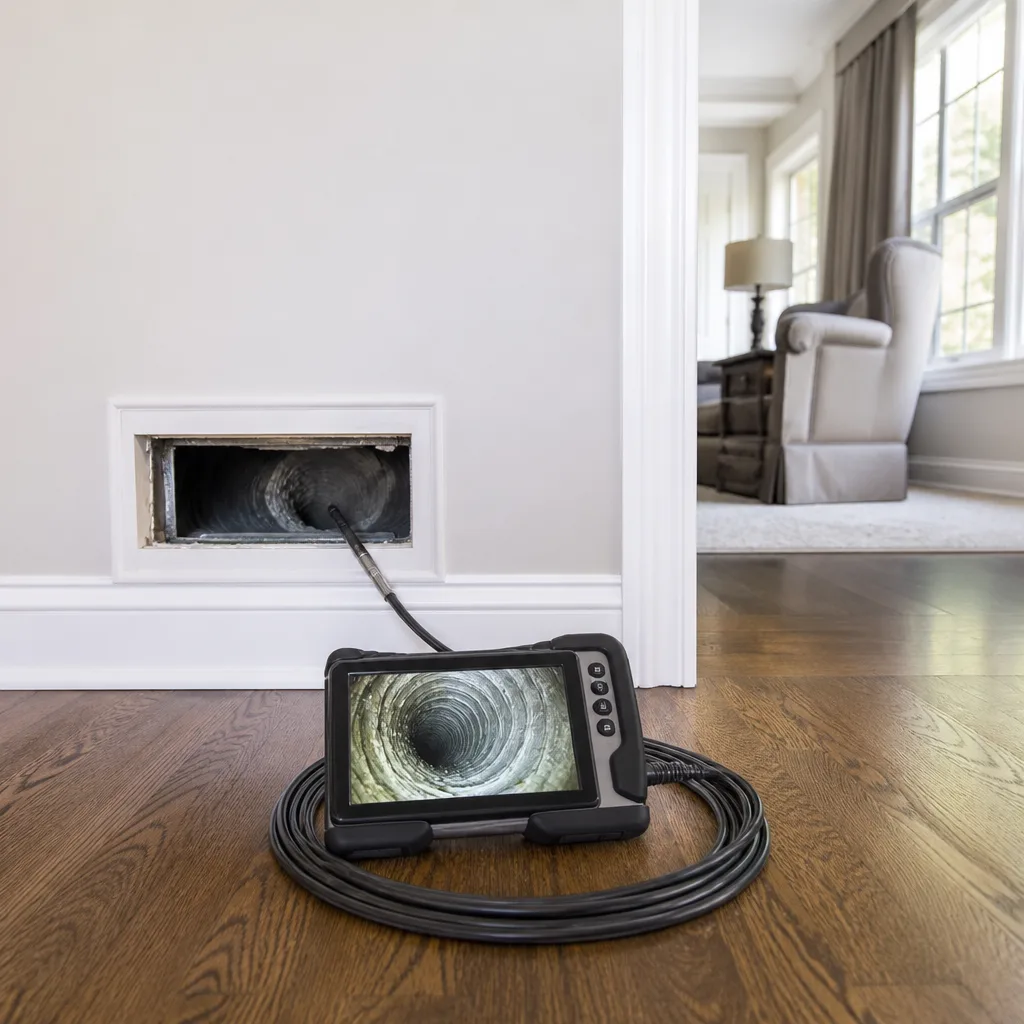 Camera inspection
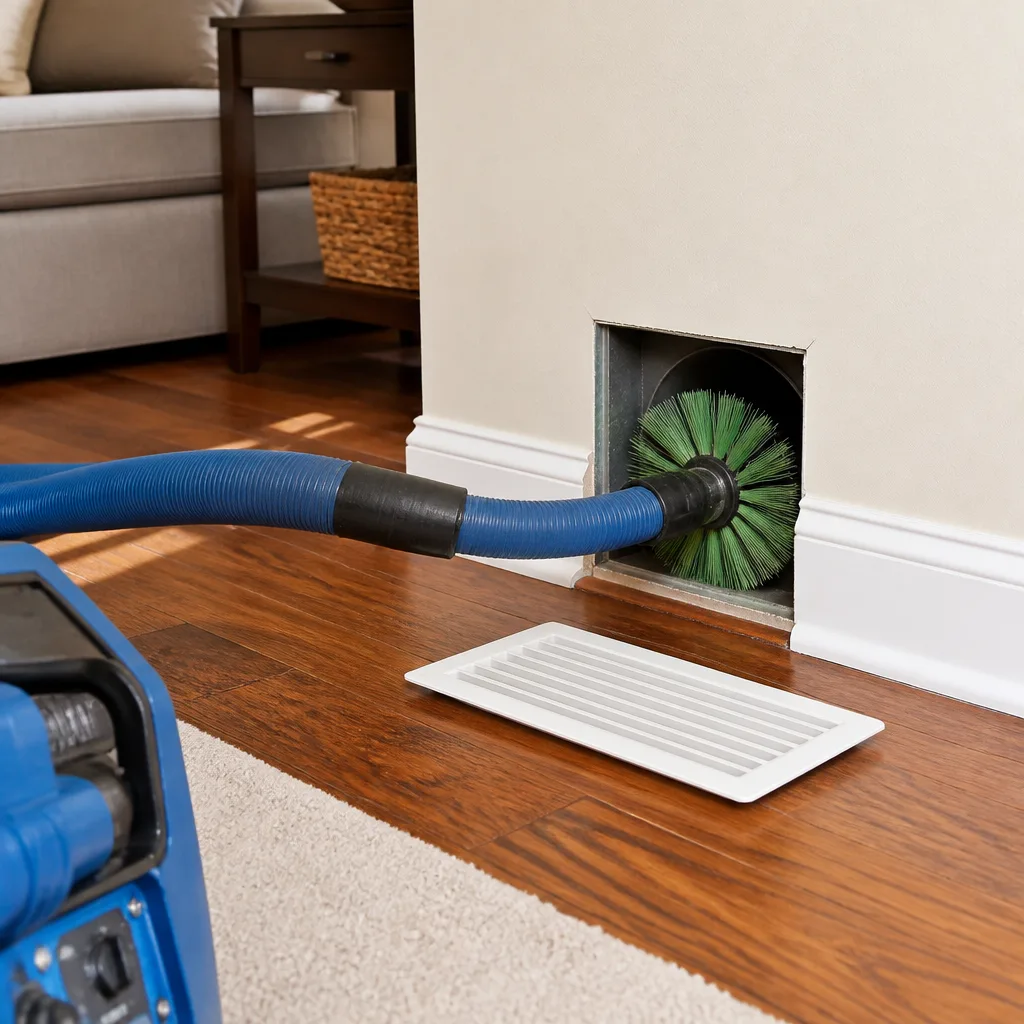 Sanitizing & deodorizing
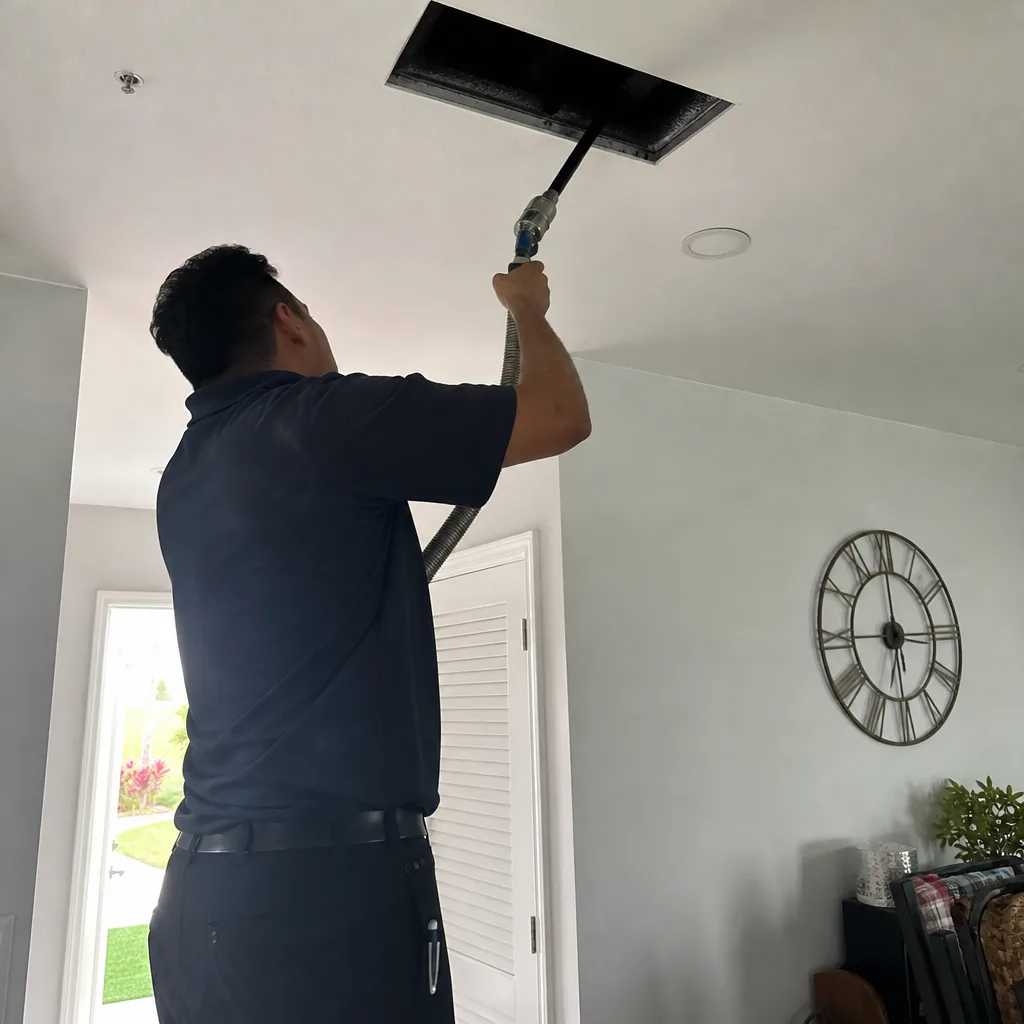
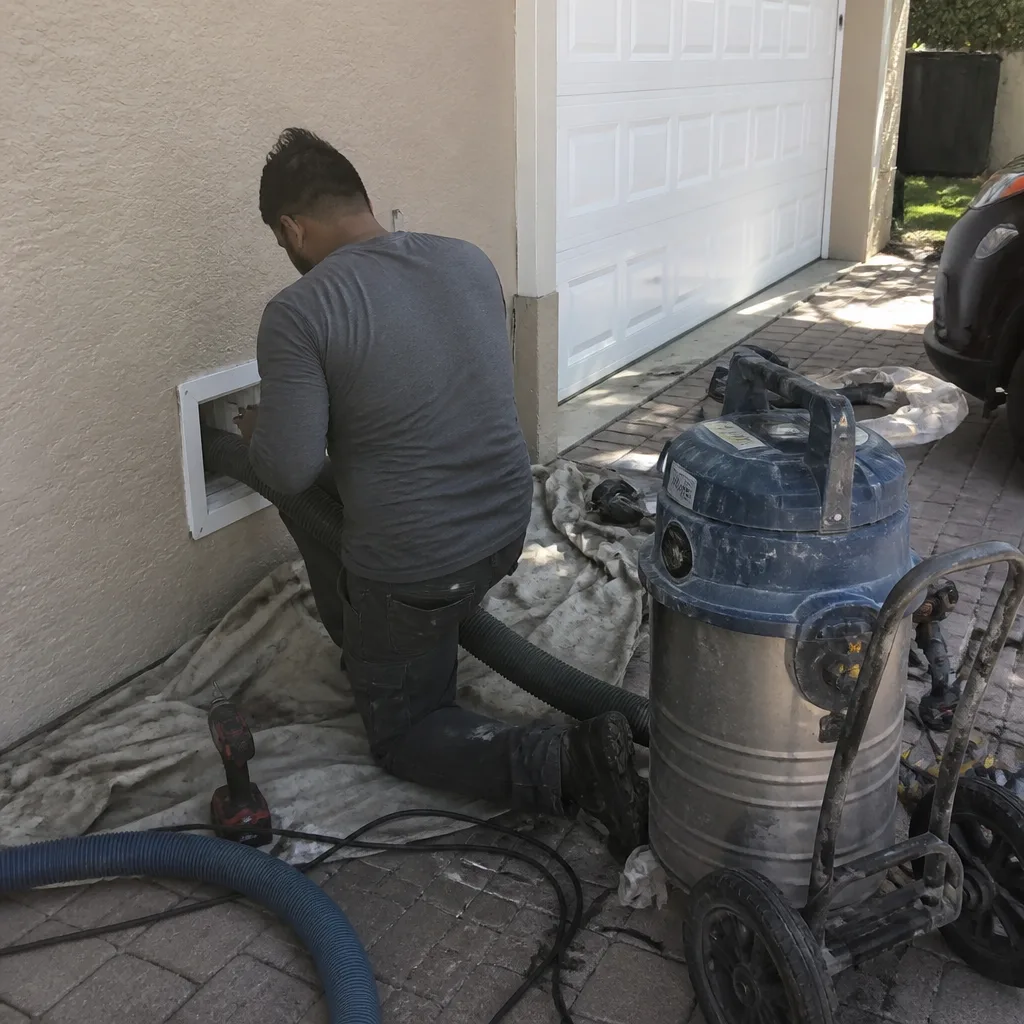
Whole-system duct and dryer vent check with before-and-after photos - you see exactly what came out of your vents
That "$99 whole-house special" is a bait ad - the real number appears once they are in your hallway, or the "clean" is a shop-vac at the register. We photograph the inside of your ducts before and after instead.
Rotobrush Vent Sanitizing: The Fort Lauderdale Owner’s Guide
If your Rotobrush vent sanitizing system has a failed nebulizer, a cracked reservoir, or a pump that’s stopped atomizing, we stock the replacement parts on our trucks and can usually complete the swap in one visit. Most Fort Lauderdale homeowners pay between $185 and $320 for parts and labor, depending on which Rotobrush model you’re running. You’ll know it’s failed when the sanitizer stops misting, when the tank leaks onto the equipment cart, or when the pump runs but nothing comes out of the nozzle.
Here’s the thing most owners don’t realize until it happens: the sanitizing module is the part of a Rotobrush system that takes the most abuse in South Florida. Ambient humidity works its way into seals, sanitizer residue dries inside the atomizer tip, and a unit that sat in a hot truck or a garage off Broward Boulevard can develop cracks in the reservoir that you won’t notice until you’re halfway through a job and your boots are wet. Dale Whitmore has pulled apart enough of these units in the field to know exactly which components fail first and which ones are worth replacing versus rebuilding. We’ll walk you through what to check, what it’ll cost, and how to get it fixed without losing a day of work.
Key Takeaways
- We’re an independent service provider in Fort Lauderdale, not affiliated with Rotobrush, but we stock and install genuine Rotobrush-compatible vent sanitizing parts.
- Installed replacement typically runs $185 to $320, with the written price in your hands before we touch the unit.
- The most common failures are clogged atomizer tips, cracked reservoirs, and pump seals degraded by sanitizer residue and Florida humidity.
- We carry OEM Rotobrush parts plus quality aftermarket equivalents that match your model’s specs.
- Every repair is covered by the 365-Day Done Right Promise: if it fails within the year, we come back and make it right at no charge.
Styles & brands we work with
Which Rotobrush Models This Applies To
The vent sanitizing module appears on Rotobrush’s aiR+ series and the earlier Roto-Shield and AQ-Vent portable sanitizer units, along with the sanitizing attachments used on the brushPRO and R2 rotary brush platforms. Identifying which one you have matters because the reservoir fittings, pump voltage, and atomizer thread pitch differ between series. Look for the data label on the back of the housing or on the underside of the cart mount. It’ll list the model number and the voltage, usually 12V DC on the portable units and 24V DC on the cart-integrated modules.
The gotcha we see most often in Fort Lauderdale: owners buy a generic 12V replacement pump online, only to find the impeller housing doesn’t seat into the Rotobrush reservoir because the inlet nipple is a different diameter. Rotobrush designed their fittings around proprietary barbs on several models, and a universal pump will either leak at the connection or bind when the clamp tightens. We match the part to your specific model, not to whatever’s cheapest on a marketplace listing. For OEM parts, order times from Rotobrush’s distribution channel run five to nine business days. Our aftermarket equivalents are built to the same dimensional specs, and we’re clear about which we’re installing and why.
Signs Your Rotobrush Vent Sanitizing Is Failing
- The nozzle mists intermittently or not at all. This is usually a clogged atomizer tip or a feed line that’s collapsed internally. Sanitizer residue, especially the quaternary ammonium formulas, dries into a film that narrows the orifice over weeks of disuse. You’ll get a weak stream instead of a fine mist.
- You’re refilling the reservoir more often than you should. When the tank or its seal develops a hairline crack, sanitizer weeps out slowly. You won’t always see a puddle; sometimes it evaporates before you notice, leaving behind a faint chemical smell and a sticky film on the cart.
- The pump runs but builds no pressure. That’s typically a failed inlet valve or a worn diaphragm. Sanitizer formulations with high alcohol content dry out the rubber over time, and once the diaphragm loses its flex, the pump spins without moving fluid.
- You hear a grinding or chattering noise from the pump. This points to a cracked impeller or debris that’s worked its way past the intake screen. Running it in this condition scores the pump body and ruins the housing, which turns a $60 part into a $150 replacement.
- The unit trips its breaker or blows the inline fuse. A pump that’s working against a clogged line draws more current than it’s rated for. If it happens once, replace the fuse and clear the line. If it happens again, the motor’s windings are breaking down and the pump needs replacement before it burns something else.
See the difference
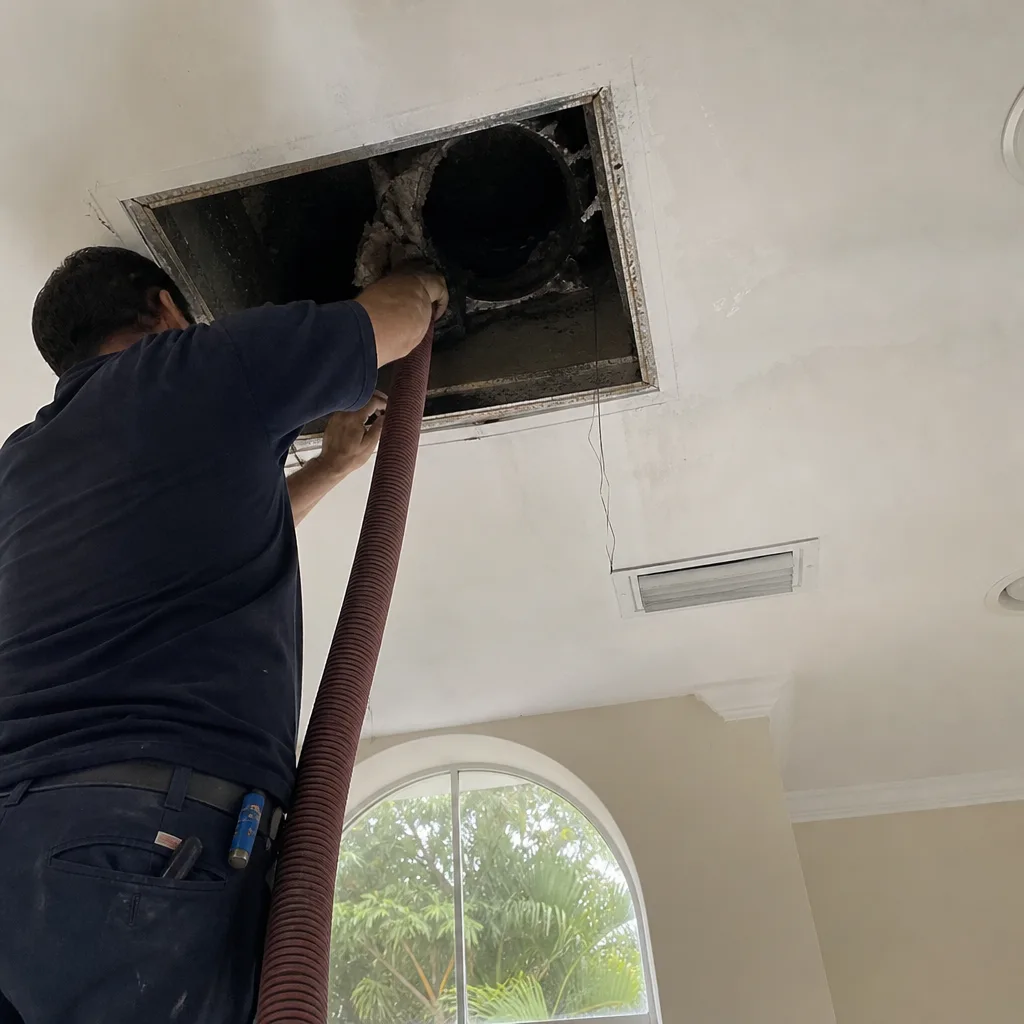 Before
 After
After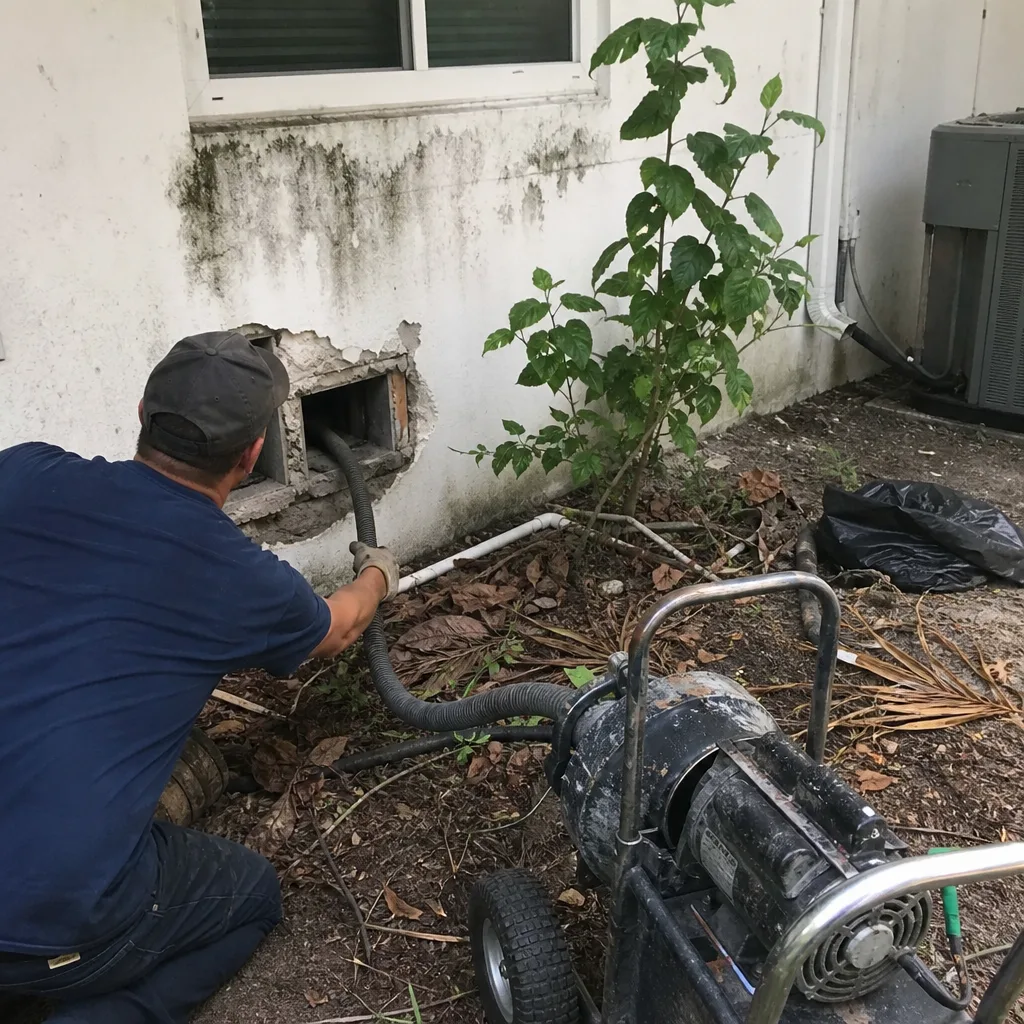 Before
 After
After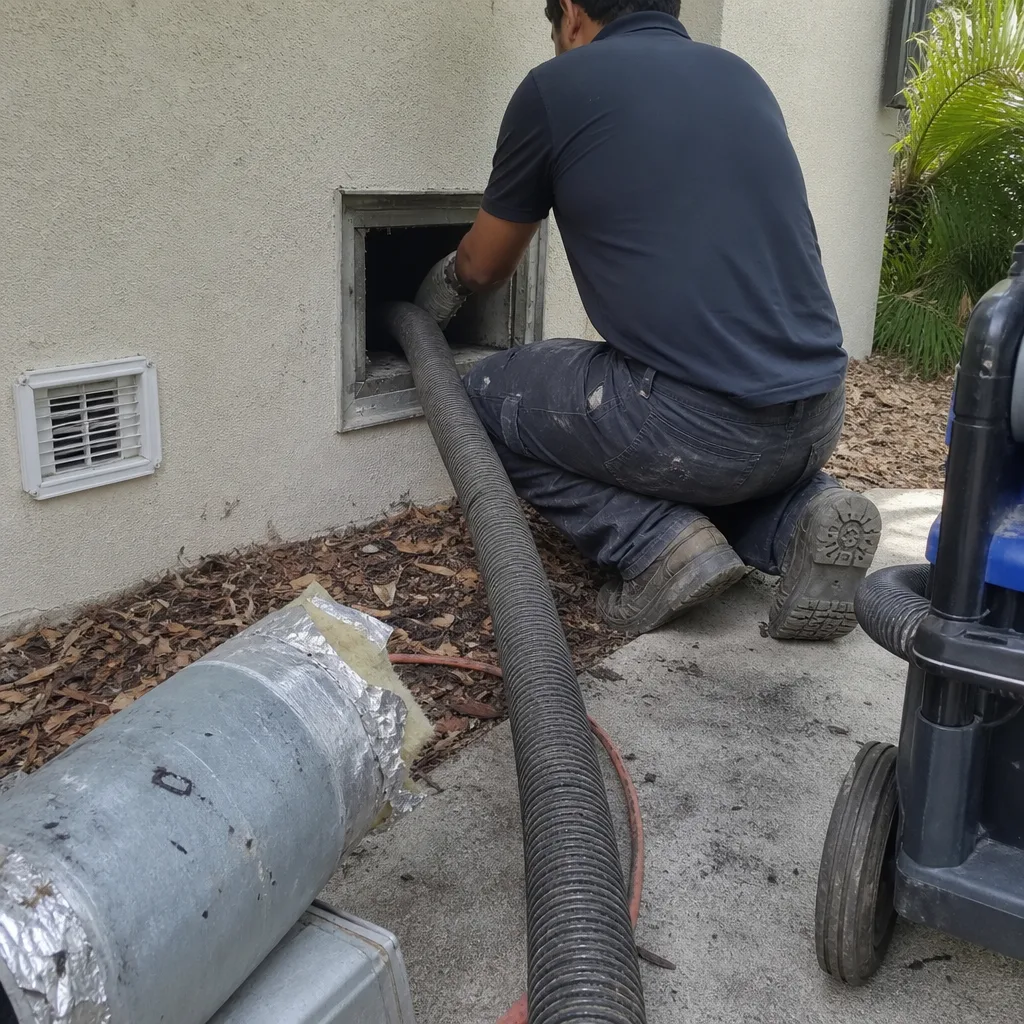 Before
 After
AfterReplacement Cost & What’s Included
In Fort Lauderdale, plan on $185 to $320 for a complete vent sanitizing module repair on a Rotobrush unit. That range covers the most common jobs: an atomizer tip and feed line replacement at the low end, a full pump and reservoir rebuild at the high end. If your unit needs both a pump and a new tank assembly, you’re looking at the upper portion of that range, and we’ll tell you that before any parts are ordered or installed.
Every quote follows the Kingswell Guarantee: the written price is in your hands before we start, and it doesn’t change when the work is done. You’re paying for the part, the labor, and the time it takes to verify the system is atomizing properly again. We test every repair by running sanitizer through the unit and checking the spray pattern before we hand it back. The work is covered by our 365-Day Done Right Promise. If that module fails within a year, we return and make it right, in writing, at no charge.
DIY or Call Us?
Honest answer: there’s a narrow band of work an owner can safely do, and then there’s everything else. Checking the intake screen for debris, cleaning the exterior of the atomizer tip with the manufacturer’s recommended solvent, and inspecting the reservoir for visible cracks are all reasonable. If you find a cracked tank or a seized pump, that’s where DIY goes sideways. Rotobrush units use DC voltage, which isn’t a lethal shock hazard, but a mis-wired pump can short against the cart frame and fry the control board, and that’s a much more expensive problem than the one you started with.
The frustrating repairs are the ones we see after a YouTube tutorial goes wrong: a reservoir glued with the wrong adhesive that dissolved on first contact with sanitizer, or a pump wired backwards that ran dry and burned out in thirty seconds. If you’re in Fort Lauderdale and you want the unit back in service without the troubleshooting hours, call us at (754) 354-9798. We’ll quote it, fix it, and show you the spray pattern before we leave.
FAQs
In Fort Lauderdale’s climate, expect three to five years of regular commercial use out of the pump and reservoir before something fails. The humidity shortens seal life, and the heat cycles in a parked truck accelerate deterioration. Units stored indoors and flushed with clean water after each sanitizing session last noticeably longer.
Atomizer tips and feed lines can almost always be cleaned or replaced inexpensively, and a pump with a worn inlet valve is often rebuildable. Once the motor windings are damaged or the impeller has scored the housing, replacement is the only reasonable option. We’ll show you exactly which situation you’re in before quoting the work.
Most vent sanitizing module repairs are done in under ninety minutes on-site. We carry the common Rotobrush parts on our trucks, so there’s usually no waiting on an order. The exception is an unusual model or a specific OEM part we need to source, which we’ll tell you about before you commit to anything.
We stock pumps, reservoirs, atomizer tips, feed lines, and seals for the aiR+ series, Roto-Shield, AQ-Vent, and the sanitizing attachments on brushPRO and R2 platforms. If we don’t have your specific part, we’ll source it and give you a straight answer on timing. We also carry parts for Lennox, Trane, and Carrier sanitizing accessories. Call (754) 354-9798 and we’ll confirm compatibility with your model number over the phone.
Written by Dale Whitmore, Owner, Kestrel Air Duct Fort Lauderdale at Kestrel Air Duct Fort Lauderdale, serving Fort Lauderdale and nearby areas.