
Last updated October 15, 2026
 Whole-home duct cleaning
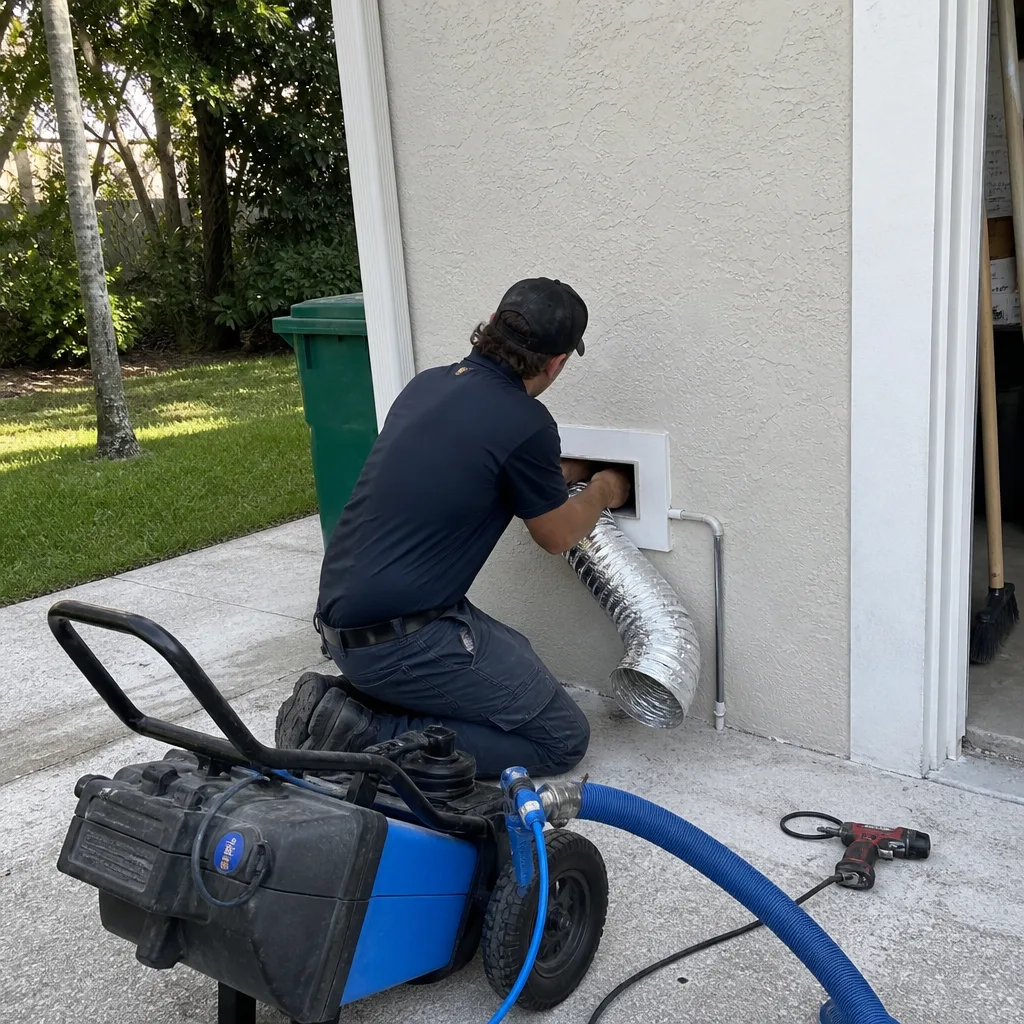
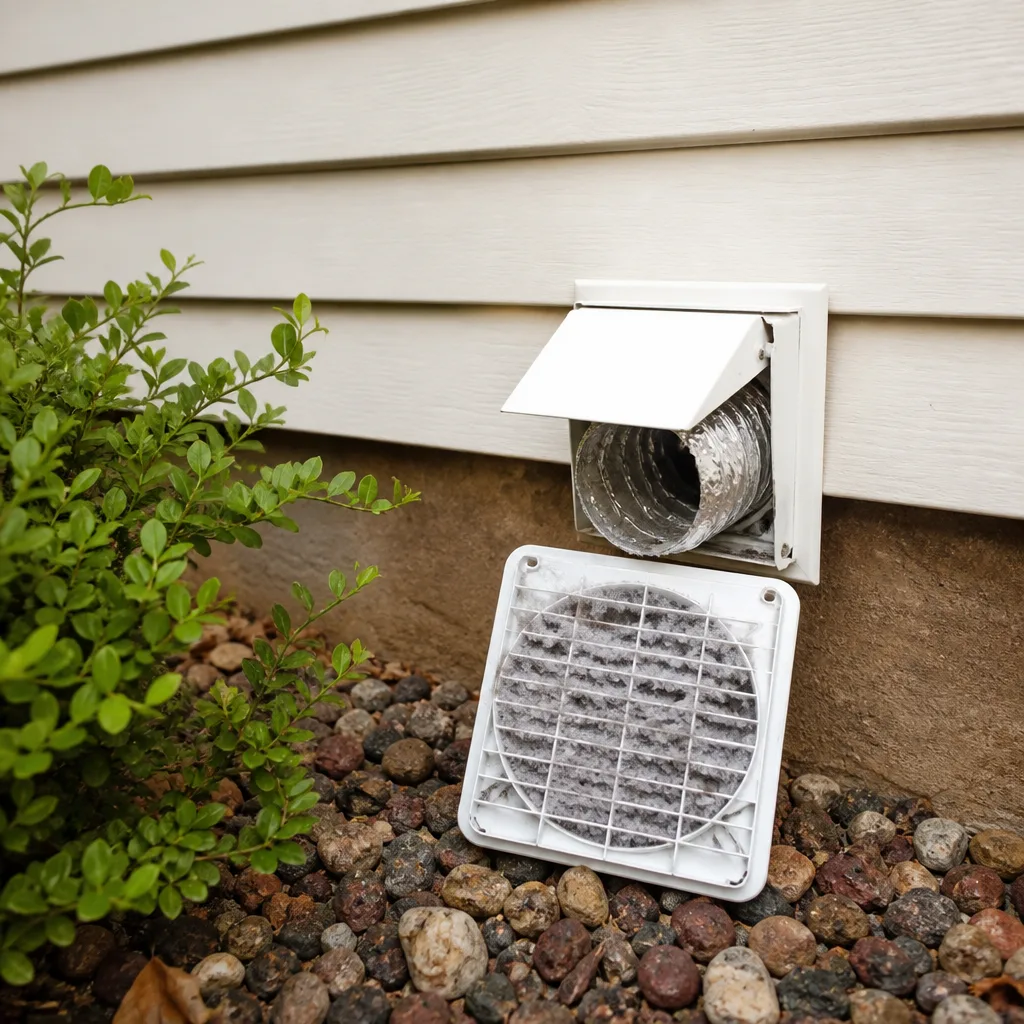 Dryer vent cleaning
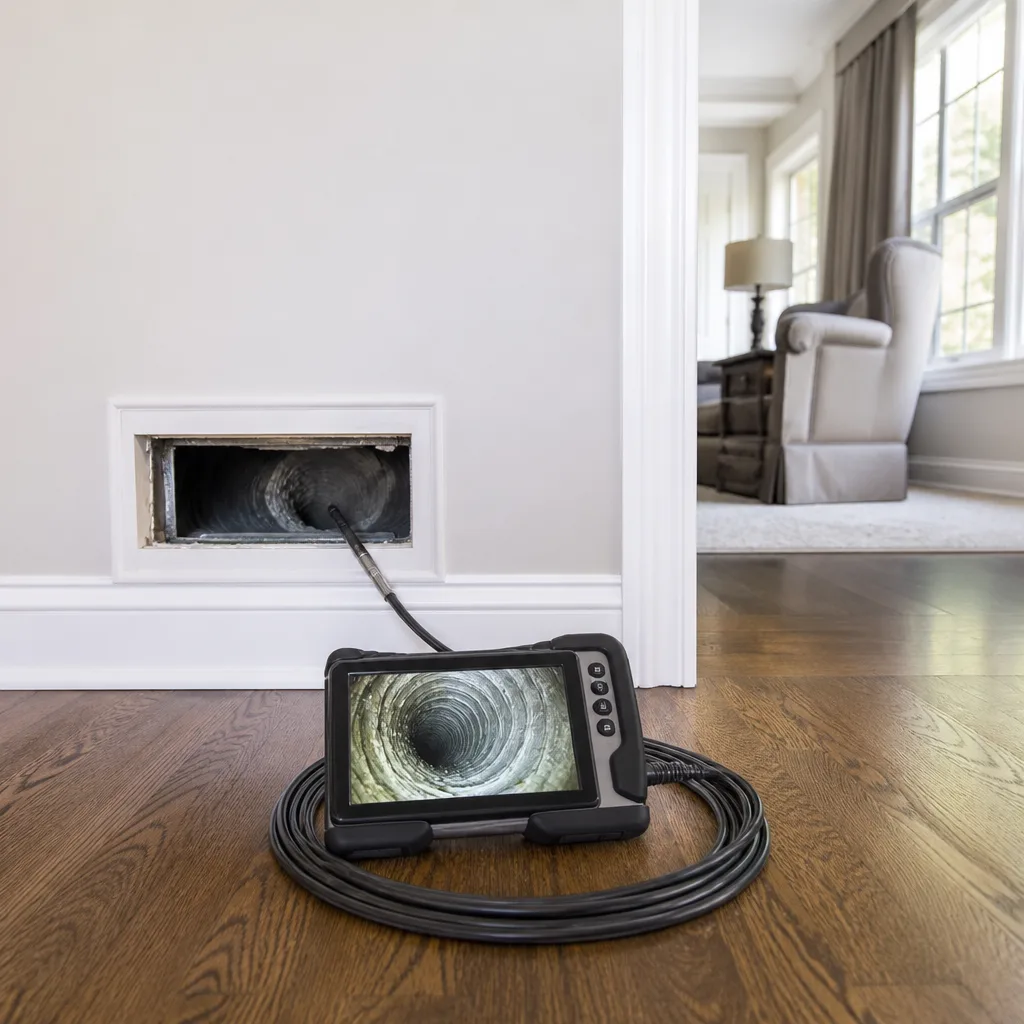 Camera inspection
 Sanitizing & deodorizing
Whole-system duct and dryer vent check with before-and-after photos - you see exactly what came out of your vents
That "$99 whole-house special" is a bait ad - the real number appears once they are in your hallway, or the "clean" is a shop-vac at the register. We photograph the inside of your ducts before and after instead.
Air Duct Cleaning Maintenance Checklist for Fort Lauderdale Homeowners
If your checklist says “replace filter every 90 days,” it was written for a dry climate. In Fort Lauderdale, a 2-inch pleated filter can load up and restrict airflow in 45 days during June peak humidity, cutting your AC’s efficiency and pulling debris deeper into the duct lining. This guide gives you a 12-month maintenance rhythm tied to the city’s wet season, dry season, and hurricane calendar, not arbitrary monthly reminders. For related reading, see our Air Duct Cleaning Warning Signs: A Fort Lauderdale Homeowner’s Reference Guide. You’ll learn what to check yourself, what to leave to a technician with a camera and manometer, and how to keep a home record that protects you when the next contractor shows up.
Quick Answer
Air duct maintenance in Fort Lauderdale follows a three-season rhythm: monthly filter checks during the wet season (June through October), a deep visual inspection of grilles and registers during the dry season (November through May), and a 48-hour post-storm protocol after any named storm. A full professional Air Duct Cleaning every 3 to 5 years, paired with filter changes every 30 to 60 days during peak humidity, keeps most Fort Lauderdale systems running clean. Homeowners can monitor airflow by feel and check for visible mold at grille faces, but anything involving the coil, plenum, or duct interior needs a technician.
Styles & brands we work with
Table of Contents
- The Wet Season Checklist: June Through October
- The Dry Season Checklist: November Through May
- The 48-Hour Post-Storm Protocol
- What You Can Check Yourself Versus What Needs a Technician
- How to Keep a Duct Maintenance Home Record
- The Three Consumables and Their Fort Lauderdale Replacement Intervals
- What Air Duct Cleaning Costs in Fort Lauderdale
- Common Mistakes to Avoid
- When to Call a Professional
- Frequently Asked Questions
The Wet Season Checklist: June Through October
Fort Lauderdale’s wet season is when your duct system works hardest and gets dirtiest fastest. Outdoor humidity regularly sits above 80 percent, and your AC runs nearly constantly to pull moisture from the air. That moisture is the problem: it collects on the cooling coil, drips into the drain pan, and creates the exact conditions where dust sticks to duct walls instead of blowing through. The result is a sticky film inside your ducts that catches every particle that passes by, and in Fort Lauderdale, that film builds faster than anywhere else in the state.
Here is the wet season routine we recommend, organized by what actually matters during these five months:
- Check filters every 30 days, not 90. A 2-inch pleated filter in Fort Lauderdale during June, July, and August can restrict airflow in as little as 45 days. If you hold it to the light and can’t see through it, replace it. During the wet season, we recommend checking on the first of every month and replacing at the first sign of loading.
- Listen for water sounds. After the AC cycles off, stand near the air handler and listen. Gurgling or dripping sounds from the drain line suggest a slow drain, which raises humidity in the duct system and feeds mold growth. A slow drain is more common in the wet season because the system pulls more water from the air.
- Feel the air at each supply register. Walk the house once a month and hold your hand at each vent. If one room feels noticeably weaker than the others, note it. Weak airflow in a single room can mean a disconnected duct, a crushed flex run, or a damper that has shifted. It will not fix itself, and leaving it means that room’s duct stays damp and stale.
- Look at the grille faces. Supply grilles and return grilles in Fort Lauderdale homes pick up a gray film during the wet season. If you see dark spots, greenish tint, or any fuzzy texture, that’s microbial growth, not ordinary dust. Wipe the visible face with a damp cloth and note it in your home record. If it returns within two weeks, the growth is coming from inside the duct or the coil.
- Check the condensate drain line monthly. Pour one cup of white vinegar into the drain line access point near the air handler. This helps slow the algae that thrives in Fort Lauderdale’s warm, wet drain pans. If the drain line has standing water or the pan under the unit is full, the line is clogged.
These five checks take about 20 minutes a month. They will not replace a professional cleaning, but they will catch the failures that announce themselves early: restricted airflow, moisture accumulation, and visible growth. In our experience with Fort Lauderdale homes, the wet season is when a system’s true condition shows itself. If you notice weak airflow in two or more rooms, call for a professional assessment rather than waiting for the dry season. We offer free estimates for air duct cleaning in Fort Lauderdale, and a technician can confirm with a camera and manometer what your hand and eye are telling you.
The Dry Season Checklist: November Through May
Fort Lauderdale’s dry season is the time for deeper inspection and maintenance, because the system is not fighting constant humidity and you can hear and see problems more clearly. From November through May, airflow issues are easier to detect by feel, and the lower humidity means less condensation to confuse the picture. This is the season for the kind of thorough check that tells you whether your ducts are actually clean or just not actively getting worse.
Run through this checklist once at the start of the dry season, typically early November, and again in March or April before the weather turns:
- Remove and wash every supply and return grille. Take them off with a screwdriver, wash them in warm soapy water, and let them dry completely before reinstalling. While the grille is off, look into the duct opening with a flashlight. You will not see deep into the system, but you can spot loose debris, insect casings, or visible mold at the first few inches of the duct.
- Inspect the return air path. The return is the side of the system that pulls air in, and it is the most overlooked part of residential ductwork. In Fort Lauderdale homes, return grilles are often located in a hallway ceiling or a wall near the living area. Look at the filter slot, the return grille itself, and the visible portion of the return plenum. If the return is pulling air from an attic or wall cavity instead of the living space, your system is inhaling insulation dust and attic heat. This is common in older Fort Lauderdale houses and it directly contaminates the ducts.
- Check for pest evidence. Dry season is when rodents and insects look for shelter. Look for droppings at the air handler, chewed flex duct insulation, or the sound of movement inside walls near duct runs. Fort Lauderdale’s warm winter means pests are active year-round, but dry season is when you will see their entry points more clearly.
- Inspect the visible ductwork in the attic or garage. If you have access, walk the attic in December or January and look at flex duct runs. Check for sagging (a flex run should be supported every 4 to 5 feet), crushed sections, and separated joints. Any visible gap at a duct connection means the system is pulling attic air and pushing conditioned air into the attic. A separated duct joint can cut airflow to a room by half.
- Test airflow balance room by room. With clean filters and the system running, hold your hand at each supply register and compare rooms. The airflow should feel consistent. Record any room that feels weak. This baseline will be useful in the wet season when you repeat the check and want to know if a room has gotten worse.
- Consider a professional inspection if it has been more than three years. The dry season is the best time for a full system evaluation. A technician with a camera can show you the actual condition of the duct lining, and a manometer reading tells you if the static pressure is high from debris buildup or a restrictive filter. At Kestrel Air Duct Fort Lauderdale home, our technicians perform this assessment as part of every duct cleaning quote, so you know what you are paying for before any work starts.
The dry season is when a maintenance-minded Fort Lauderdale homeowner should make the call to schedule a professional cleaning. The weather is mild enough that a cleaning will not interrupt your comfort, and you will enter the wet season with a system that is not already loaded with the previous summer’s debris. Homes that go into June with dirty ducts have a much harder wet season, because the humidity amplifies every problem already present.
The 48-Hour Post-Storm Protocol
Named storms are a fact of life in Fort Lauderdale, and your duct system is vulnerable in ways that go beyond roof leaks and flooding. The combination of high winds, driving rain, and power loss creates specific risks for the air system. A post-storm protocol matters because some damage is not visible from the living room, and declaring your system fine too early can lock in mold growth that will spread through the ducts over the following months.
Here is the 48-hour protocol we recommend after any named storm passes over Fort Lauderdale:
- Do not run the cooling coil for the first 24 hours if the power was out or the system was off during the storm. Run the fan only, with cooling disabled. This circulates air through the ducts without pulling additional moisture through the coil. The goal is to dry the inside of the duct system, not add more water to it. If you run cooling immediately after a storm and the interior of the system is damp, you create the exact warm, wet, dark environment where mold establishes in 24 to 48 hours.
- Look for water stains at every grille. Walk the house and inspect the ceiling or wall around each supply and return grille. A water stain means water entered the duct run or the framing around it. Even a small stain is significant in Fort Lauderdale, where the ambient humidity prevents quick drying. Mark the location, photograph it, and note it in your home record.
- Sniff the air from each register. Crouch near each supply grille and smell the airflow with the fan running. A musty, earthy, or “wet towel” smell means microbial growth inside the duct or on the coil. This smell will not clear on its own and typically worsens as the system runs.
- Check the outdoor condensing unit for debris. Palmetto fronds, leaves, and storm debris can block the coil and starve the system for air. A blocked condenser raises refrigerant pressure and reduces cooling capacity, which means longer run times and more moisture left in the air. Clear debris gently with a garden hose on a low-pressure setting, and never bend the aluminum fins.
- Run the system and confirm all rooms still have airflow. After the fan-only drying period, run the AC normally and check each supply register. A storm can shift flex duct, pull apart a joint, or fill an exterior duct opening with debris. If any room lost airflow during the storm, the cause is often in the duct run, not the AC unit itself.
If you find water stains, persistent musty smells, or airflow loss after a storm, call a professional before running the system heavily. The first 48 hours are when the damage is contained. In our experience with Fort Lauderdale homes after storms, the systems that get inspected quickly are the ones that avoid the long-term contamination that turns a $400 cleaning into a $4,000 remediation. Our team can assess the system with a camera and give you a written price for any cleaning or repair before work starts.
What You Can Check Yourself Versus What Needs a Technician
A practical Fort Lauderdale duct maintenance plan separates homeowner checks from technician work. The homeowner checks are about monitoring: catching changes early, documenting what you find, and knowing when to bring in the next level. The technician work is about diagnosis and correction: seeing inside the ducts, measuring airflow pressure, and removing what has accumulated. Here is the honest split.
What a homeowner can and should check:
- Filter loading. Pull the filter monthly and hold it to the light. If you cannot see light through the pleats, replace it. This is the single highest-impact maintenance task in Fort Lauderdale.
- Airflow by feel. Hold your hand at each supply register while the system runs. You are not measuring CFM. You are comparing rooms and noting changes over time. A room that gets weaker month over month is telling you something.
- Visible grille and register condition. You can see the grille face, the first inch or two of the duct opening, and the surrounding wall or ceiling. Dark spots, greenish tints, fuzzy texture, or water stains are all observable without tools.
- Condensate drain behavior. You can check for standing water in the drain pan under the air handler and pour vinegar into the drain line access. You cannot clear a deep clog, but you can catch the early signs.
- Pest evidence. Droppings near the air handler, chewed insulation, or pest sounds from the walls near duct runs are all observable.
What requires a technician with specialized equipment:
- The condition of the duct lining. The interior walls of your ducts cannot be seen from the grille. A technician uses a camera system to inspect the full run, including flex duct that may be sagging, torn, or disconnected in the attic. During a professional cleaning, this camera footage also serves as your proof of condition before and after the work.
- Static pressure measurement. A manometer measures the resistance to airflow inside the system. High static pressure can mean a restrictive filter, an undersized return, or debris buildup deep in the ducts. You cannot measure this by feel.
- Coil and plenum inspection. The cooling coil sits inside the air handler and the plenum is the metal box that distributes conditioned air to the duct runs. Both collect moisture and debris, and both are difficult to inspect without removing access panels.
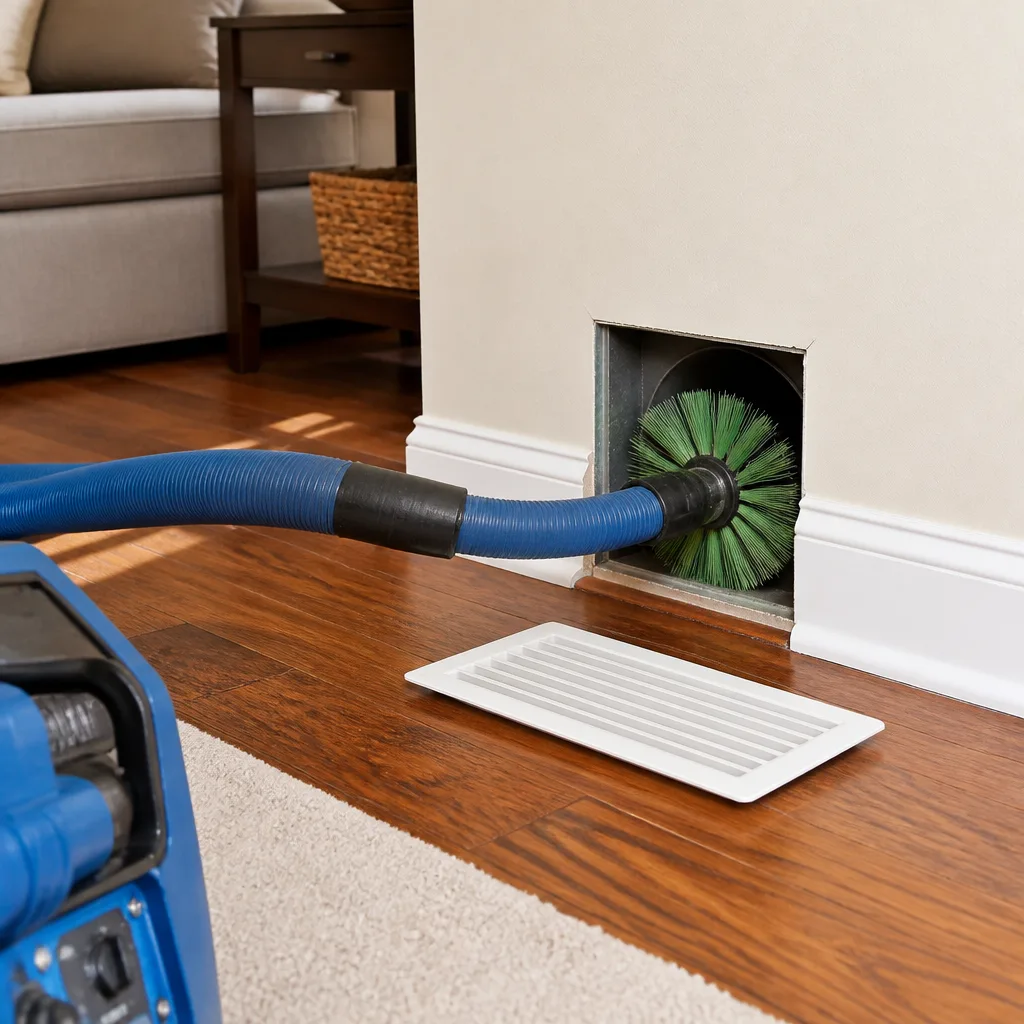
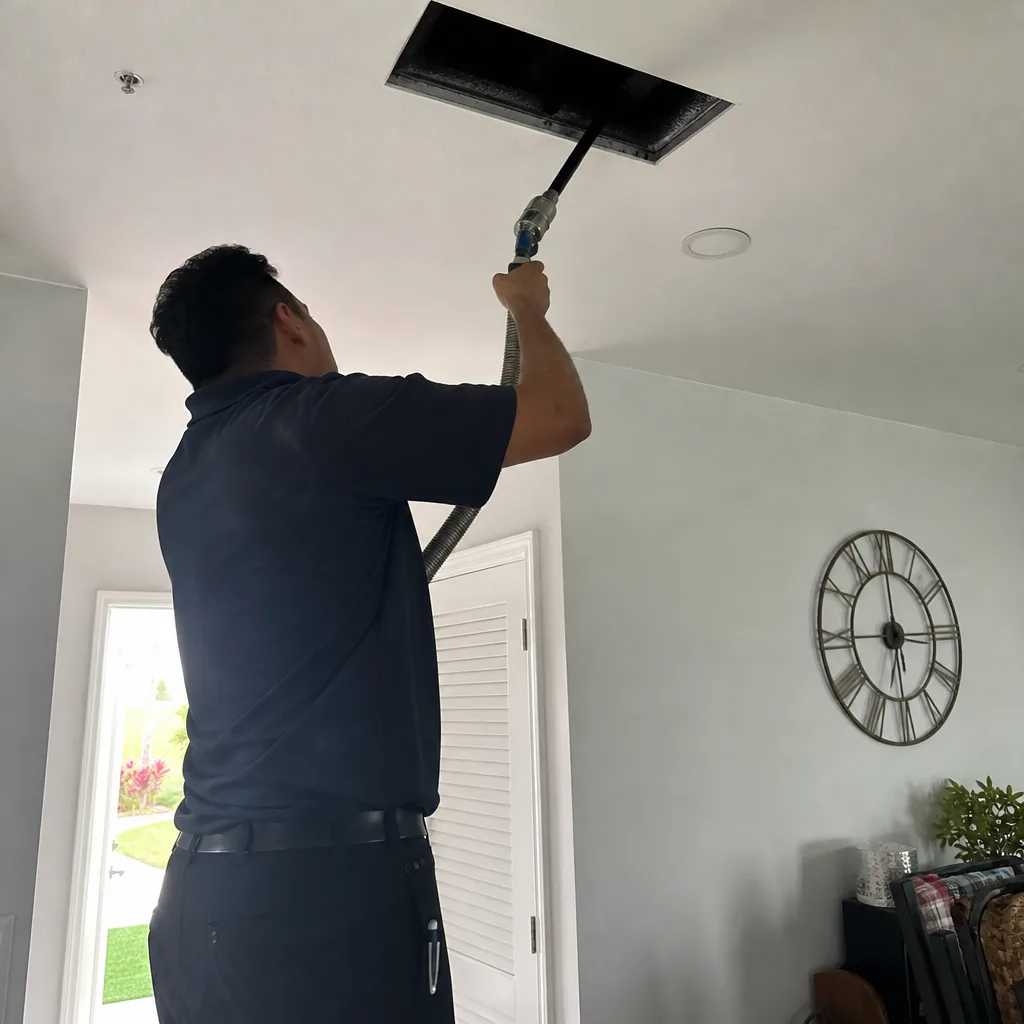
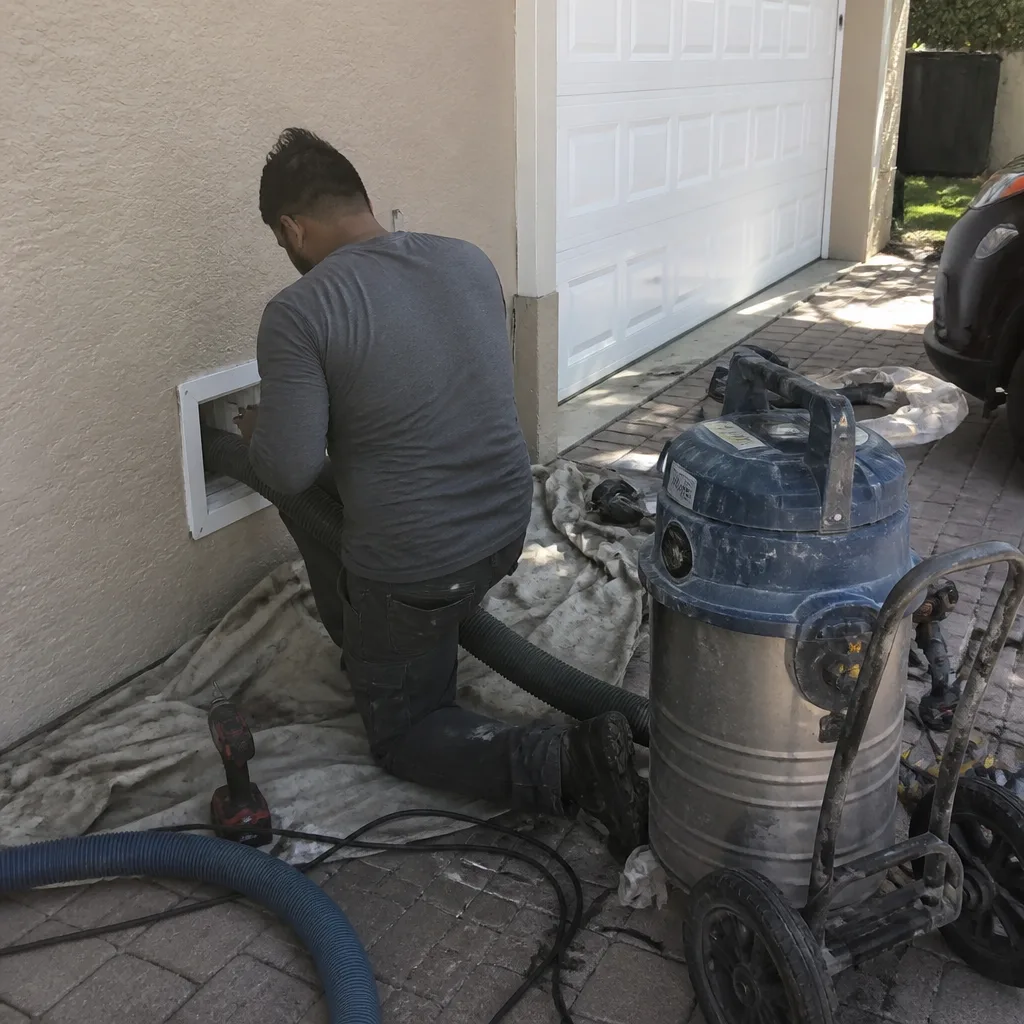
- Debris removal at the duct wall. Airflow alone does not remove the sticky film that accumulates on duct walls in Fort Lauderdale’s humidity. Professional cleaning uses rotary brush agitation, like the Rotobrush system we run, to dislodge that debris. Negative-pressure extraction, using Nikro units, then pulls the loosened material out of the ducts rather than blowing it into your living space. Abatement Technologies HEPA filtration captures particles so they do not re-enter the air stream. This is not equipment you can rent or replicate with a shop vac.
The line between homeowner and technician work is not about effort or intelligence. It is about tools and access. If you cannot see it or measure it, you cannot maintain it. That is not a shortcoming; it is a boundary. The key for a Fort Lauderdale homeowner is to do the checks you can do consistently, document them, and use that documentation when it is time to call in a professional.
How to Keep a Duct Maintenance Home Record
The most underrated tool in Fort Lauderdale duct maintenance is a simple written log. It protects you in two ways: it helps you see patterns before they become failures, and it prevents a contractor from claiming that a problem in your ducts is new when it has actually been documented for years. In a market where price-changing and problem-inventing are real concerns, a home record is your factual defense.
Here is how to set up and keep a duct maintenance record that works:
- Create a single document or notebook. Use a paper notebook, a Google Doc, or a spreadsheet. The format matters less than consistency. Write in it every time you perform a check.
- Record the date, the filter type and age, and airflow observations. Each entry should be three lines: date, what you checked, and what you found. Example: “June 1, 2025. Filter 45 days old, visible loading, replaced. Airflow consistent in all rooms. Drain line clear.”
- Photograph any visible issue. If you see dark spots at a grille, a water stain on a wall, or pest droppings, photograph it with your phone and save the image in a folder that matches your written log. These photos are dated automatically, which is useful if you need to show a contractor a timeline.
- Note any service performed, with dates and prices. Every professional cleaning, repair, or assessment should have a written record. Include the price you paid, the company name, and the date. If a contractor claims you need work that was already done, your record is the proof.
- Review the record before hiring anyone. Before you schedule a cleaning or diagnostic visit, read your log. It will tell the contractor more useful information than a verbal description, and it signals that you are informed. Contractors who know you keep records are less likely to invent findings.
A maintenance log takes five minutes per check. Over five years, it gives you a complete history of your system that no contractor can contradict. In Fort Lauderdale, where the humid climate means every month of neglect compounds, that history is the difference between a system that fails suddenly and one that warns you early.
The Three Consumables and Their Fort Lauderdale Replacement Intervals
Your duct system depends on three consumables that wear out on a schedule: the filter, the UV bulb if you have an in-duct UV system, and the drain pan treatment. Most generic advice gives national-average replacement intervals, but Fort Lauderdale’s humidity and run times change every one of them. Here is what actually applies in this climate.
1. The air filter. The national standard for a 2-inch pleated filter is 90 days. In Fort Lauderdale, that interval is wrong during the wet season and closer to right during the dry season. June through October, check monthly and expect to replace every 30 to 60 days. November through May, check every 60 days and replace at 90 if the filter is not loaded. The variable is runtime. In summer, your system may run 12 to 18 hours a day, which loads a filter two to three times faster than a seasonal system. Loaded filters restrict airflow, raise energy use, and pull more debris into the ducts.
2. The UV bulb. If your system has an in-duct UV light for mold and bacteria control, the bulb has a finite life and loses intensity even while it still glows. In a Fort Lauderdale system that runs heavy hours, a UV bulb should be replaced every 12 months rather than the 2-year interval often quoted for cooler climates. A bulb that has lost intensity is not controlling growth; it is just drawing power. If you cannot remember when the bulb was last replaced, it is time.
3. The drain pan treatment. Drain pan tablets or strips slow the algae and biofilm that grow in a Fort Lauderdale condensate drain pan. The standing water in that pan is warm and full of organic matter, which is exactly what algae wants. A treatment strip or tablet should be replaced every 30 to 60 days during the wet season and every 90 days during the dry season. The simpler alternative is the monthly vinegar flush described earlier, which also works and costs pennies.
These three consumables are the maintenance items that most directly affect duct cleanliness between professional cleanings. When they fail, the system gets wetter, the air gets dirtier, and the ducts accumulate debris faster. When they are maintained, they slow the buildup and extend the useful life of a professional cleaning. If you want additional protection between visits, Guardsman filtration and IAQ products are available for homeowners who want hospital-grade filtration at the return. Most Fort Lauderdale homes do not need that level of filtration, but it matters for households with respiratory conditions or severe allergies.
What Air Duct Cleaning Costs in Fort Lauderdale
Air duct cleaning in Fort Lauderdale typically runs between $450 and $850 for a whole-home system, depending on the number of supply and return runs, the accessibility of the air handler, and the level of contamination within the ducts. Homes with a single return and fewer than 10 supply runs fall at the lower end. Larger homes with multiple systems, or systems with visible mold, heavy construction debris, or pest contamination, fall at the higher end or above.
The price range matters because Fort Lauderdale is a market where duct cleaning prices vary widely, and some advertised prices are not honest. A $99 “whole house special” is not a real duct cleaning. It is a bait price designed to get a technician into your home so the invoice can be revised upward once the work is underway. Kestrel Air Duct Fort Lauderdale operates under the Kingswell Guarantee, which means one flat price per system, written and in your hands before any work begins. The price does not change at the door.
Here is the honest breakdown of what a duct cleaning in Fort Lauderdale should include at that price:
- Camera inspection before and after. You should see the inside of your ducts on screen before cleaning starts, and again when the work is done. This is proof of both the problem and the result.
- Rotary brush agitation at the duct wall. The Rotobrush system physically scrubs the duct lining. It dislodges the sticky film that Fort Lauderdale humidity creates, which airflow alone cannot remove.
- Negative-pressure extraction. Nikro negative-air units pull the loosened debris out of the duct system and contain it. Without negative pressure, a brush just stirs the dirt around and lets it settle back.
- HEPA filtration during the work. Abatement Technologies filtration units ensure that loosened particles do not waft through your living room while the cleaning happens.
- Written guarantee with a stated duration. Ask. If a company will not put its guarantee in writing, or will not state how long it lasts, the guarantee is marketing, not policy. Our 365-Day Done Right Promise is printed on every job we do: if the work falls short within a year, we return and make it right at no charge.
For more detail on pricing and what to expect, see our guide to air duct cleaning in Fort Lauderdale. If you want a free, no-obligation quote for your home, call (754) 354-9798 and we will give you a written price before any work is scheduled.
Common Mistakes to Avoid
- Following a dry-climate filter schedule. A 90-day filter interval works in Phoenix or Denver. In Fort Lauderdale’s wet season, a 2-inch pleated filter can load in 45 days. If you replace on a dry-climate schedule, you run restricted airflow for half the summer, which pulls more debris into the ducts and shortens the life of your blower motor.
- Running the AC immediately after a storm without checking the system. If the interior of your duct system is damp from storm water or a power outage, running cooling immediately can lock that moisture in. Run the fan only for the first 24 hours, then assess before returning to normal cooling.
- Hiring based on the lowest phone quote. In Fort Lauderdale, duct cleaning prices below $250 are almost always a lead-generation tool. The technician arrives, opens a panel, and finds reasons to charge more. Get a written price for the whole system before work begins, and insist on camera verification before and after.
- Ignoring weak airflow in a single room. A room that consistently gets weaker is not a quirk. It is a signal: a crushed flex run, a disconnected joint, or a damper that has closed. The longer it goes unaddressed, the more that duct run collects stale, damp air that feeds mold growth.
- Skipping the return side of the system. Homeowners focus on supply registers because those are where conditioned air comes out. But the return side is where air comes in, and if the return is pulling from an attic or wall cavity, your “clean” ducts are being fed attic dust daily. In older Fort Lauderdale housing stock, this is common and it is fixable.
- Not keeping a written record. If you do not document your maintenance, the next contractor can tell you anything, and you will not be able to contradict it. A five-minute log entry per month builds a factual history that changes the dynamic of every service call.
- Treating duct cleaning as a one-time event. A professional cleaning is not a tattoo. It does not last forever. Fort Lauderdale humidity means ducts begin re-accumulating debris as soon as the cleaning is done. The goal is not to clean once and forget it; the goal is to establish a rhythm of checks, consumables, and professional service that keeps the system clean over years.
When to Call a Professional
Call a duct professional when you see or measure something you cannot explain or fix: visible mold at multiple grilles, a persistent musty smell that does not clear after filter replacement, water stains around registers after a storm, or airflow that continues to weaken despite clean filters and open dampers. Call after any named storm if you suspect water entered the system, because the first 48 hours are when intervention is inexpensive. Call if you have lived in your Fort Lauderdale home for more than three years and cannot remember the last time the ducts were inspected. A professional camera inspection settles the question definitively. If you have documentation of your own checks and findings, bring it to the appointment. Kestrel Air Duct Fort Lauderdale offers free estimates in Fort Lauderdale. Call (754) 354-9798 and we will give you a written price before any work begins, under the same Kingswell Guarantee that has governed every job since 2004.
Frequently Asked Questions
Most Fort Lauderdale homes need professional duct cleaning every 3 to 5 years, with the shorter interval applying to homes with pets, smokers, or residents with allergies. The deciding factors are the visible condition of the grilles and registers, the level of debris seen in a camera inspection, and how well the homeowner has maintained filters and drain lines. A home that runs a loaded filter for months at a time in the wet season will need cleaning sooner than a home with disciplined monthly filter checks. Call (754) 354-9798 for a free camera inspection and you will know exactly where your system stands.
Cheap duct cleaning quotes in Fort Lauderdale are typically marketing prices, not service prices. A company advertising $99 or $149 for whole-home cleaning is using that number to get a technician into your home, after which the price is revised upward based on “unexpected findings.” Kestrel Air Duct Fort Lauderdale gives one flat price per system in writing before any work starts. No revisions, no surprises, no door-step changes. If a quote seems too low to be honest, it probably is. Call (754) 354-9798 for a written quote with no obligation.
Ask for camera footage before and after the cleaning. A professional Fort Lauderdale duct cleaning should include a visual inspection of the duct interior before work begins, and another after the work is complete. You should be able to see the difference on screen. Kestrel shows you the camera feed during the job, and the 365-Day Done Right Promise means if you find the work was incomplete within a year, we return and make it right at no charge. That promise is written on every job.
In the 48 hours after a named storm, run the fan without cooling for the first 24 hours to dry the duct interior before adding more moisture through the coil. Inspect every grille for water stains, check for musty smells, clear debris from the outdoor condenser, and confirm all rooms still have airflow. If you find water stains, persistent odors, or lost airflow, call a professional before running the system heavily. Early intervention prevents what starts as a small moisture problem from becoming a system-wide contamination.
Yes. A loaded filter is the leading cause of duct contamination in Fort Lauderdale, because a restricted system pulls harder and draws debris from unconditioned spaces like attics and wall cavities. The filter is the first line of defense for the entire duct system, and in Fort Lauderdale’s humidity, it fails faster than national averages suggest. Check monthly during the wet season. Replace when you cannot see light through the pleats.
Change your filter on a Fort Lauderdale schedule, which means monthly checks from June through October and replacement every 30 to 60 days during that window. Check the drain line monthly and pour vinegar through it to slow algae. Keep a written log of every check. These three habits do more to extend the life of a professional cleaning than anything else a homeowner can do. If you want us to assess your system and show you what your maintenance has accomplished, call (754) 354-9798 for a free estimate.
The Bottom Line
Fort Lauderdale duct maintenance is not a once-a-year task list. It is a rolling rhythm that follows the city’s three seasons. Check filters monthly during the wet season, inspect the full system during the dry season, and run the 48-hour post-storm protocol after every named storm that passes through. Document what you find in a simple written record. Replace the three consumables on Fort Lauderdale intervals. And when you need a professional, hire one who puts the price in writing before the work starts and stands behind the result with a written guarantee. For a free estimate and a camera inspection of your ducts, call Kestrel Air Duct Fort Lauderdale at (754) 354-9798. We will show you what is in your ducts, give you a flat price in writing, and clean the system under the 365-Day Done Right Promise. For more on related maintenance, see our guide to dryer vent cleaning in Fort Lauderdale.
Written by Dale Whitmore, Owner at Kestrel Air Duct Fort Lauderdale, serving Fort Lauderdale since 2004.
See the difference
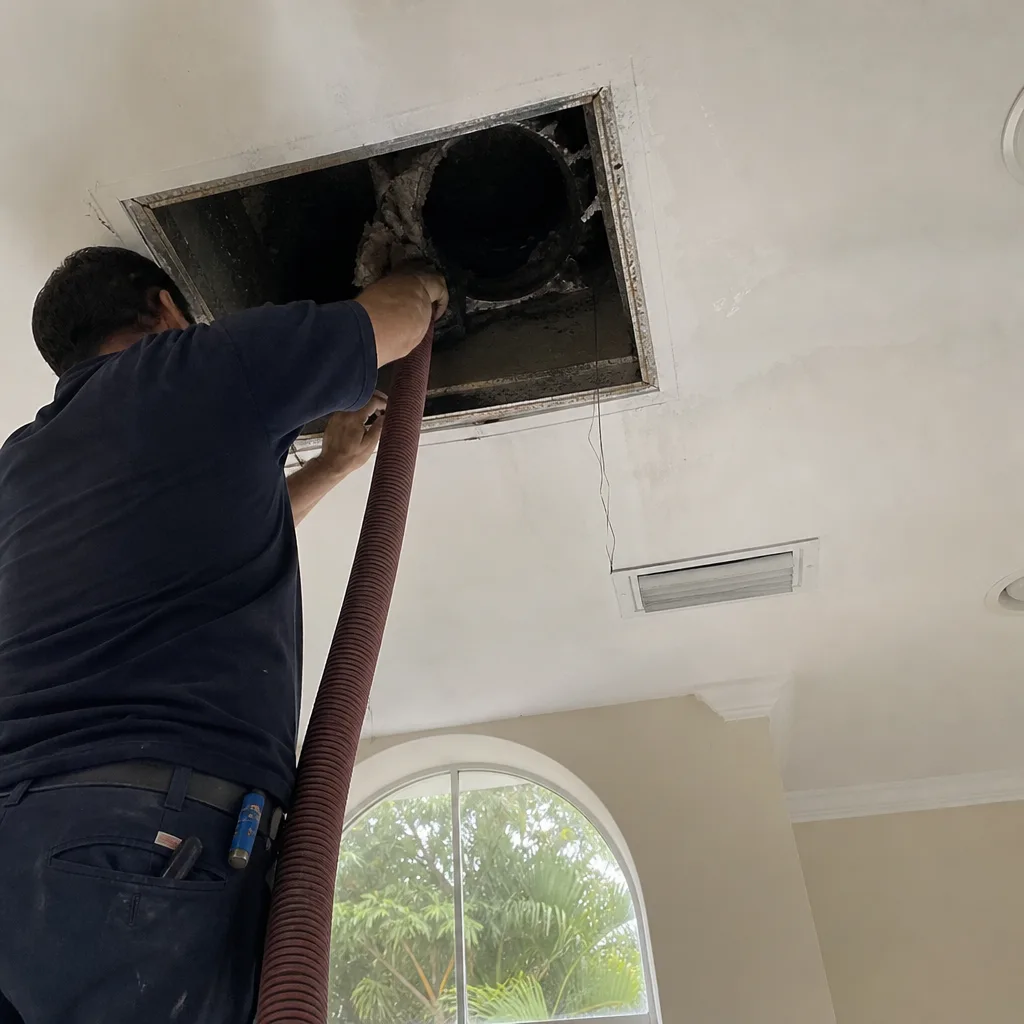 Before
 After
After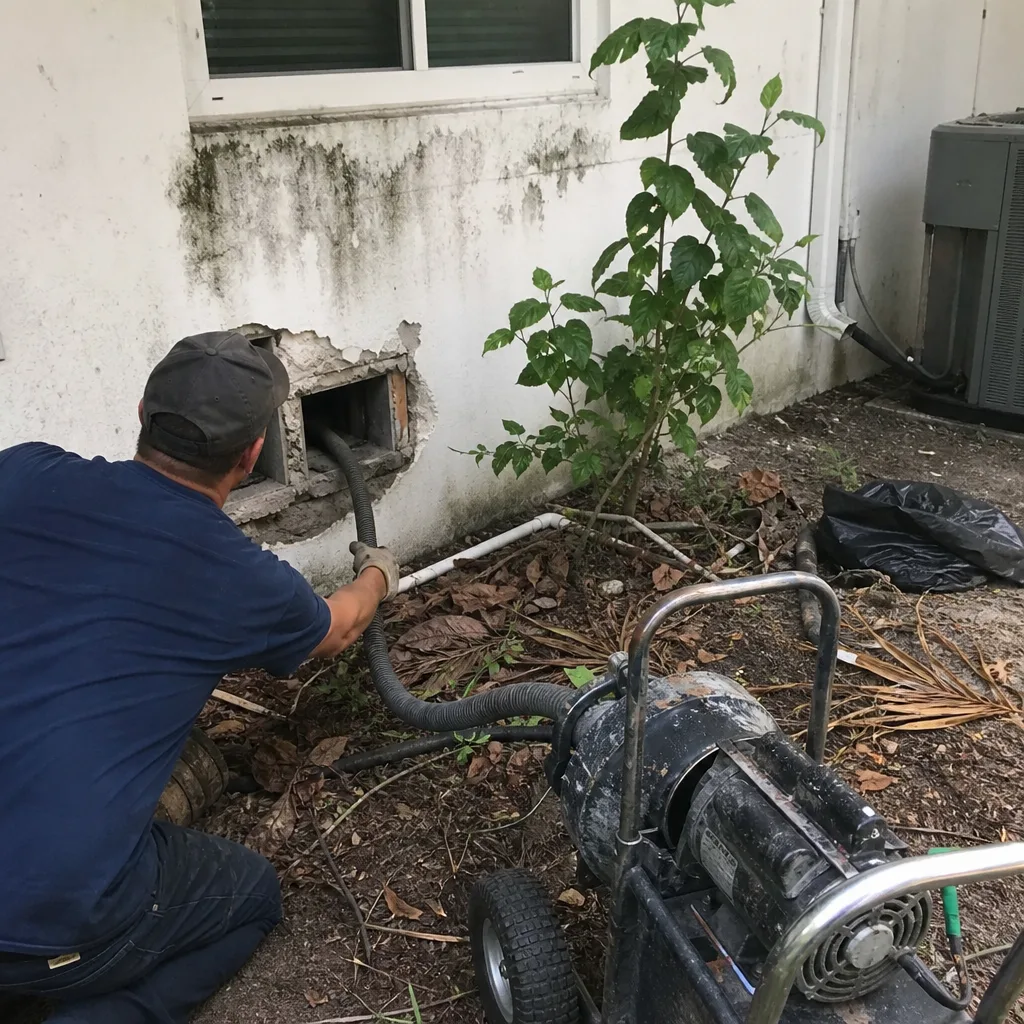 Before
 After
After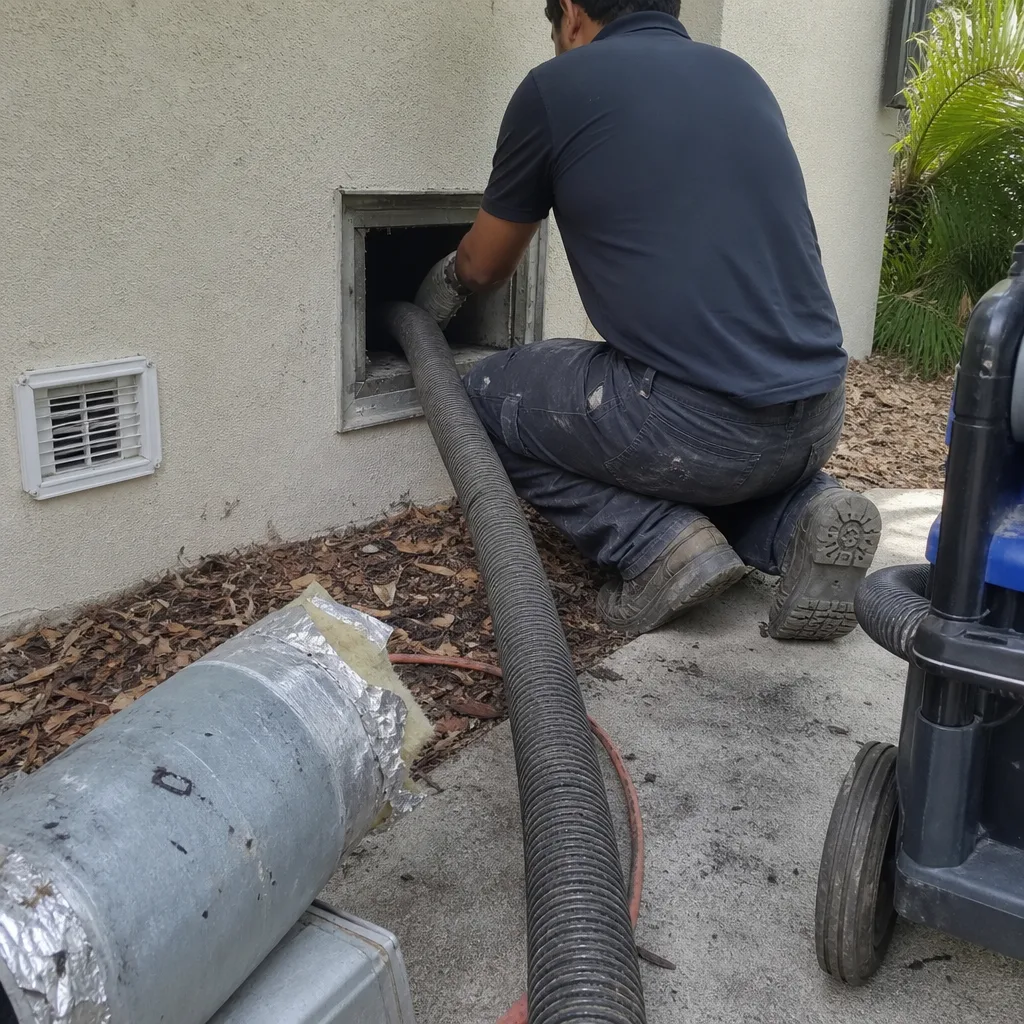 Before
 After
After