
Last updated October 15, 2026
 Whole-home duct cleaning
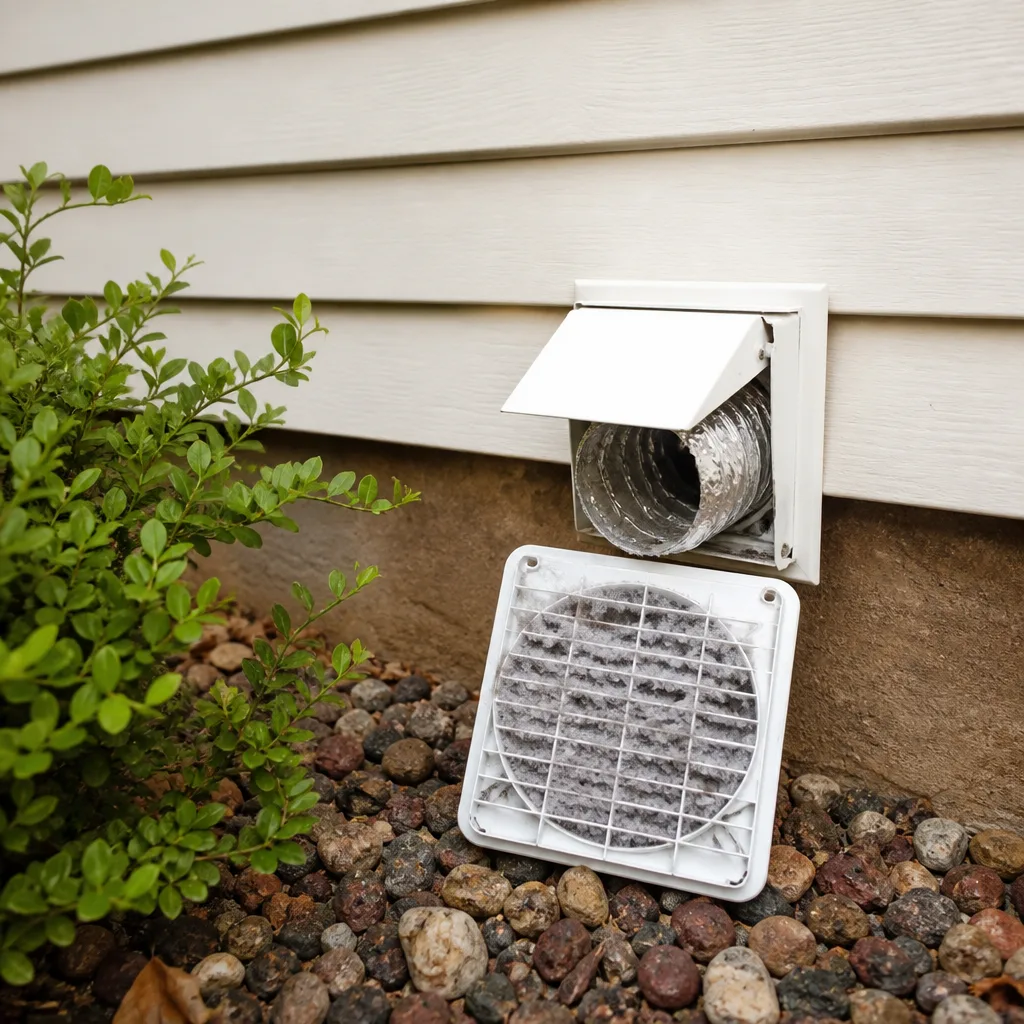 Dryer vent cleaning
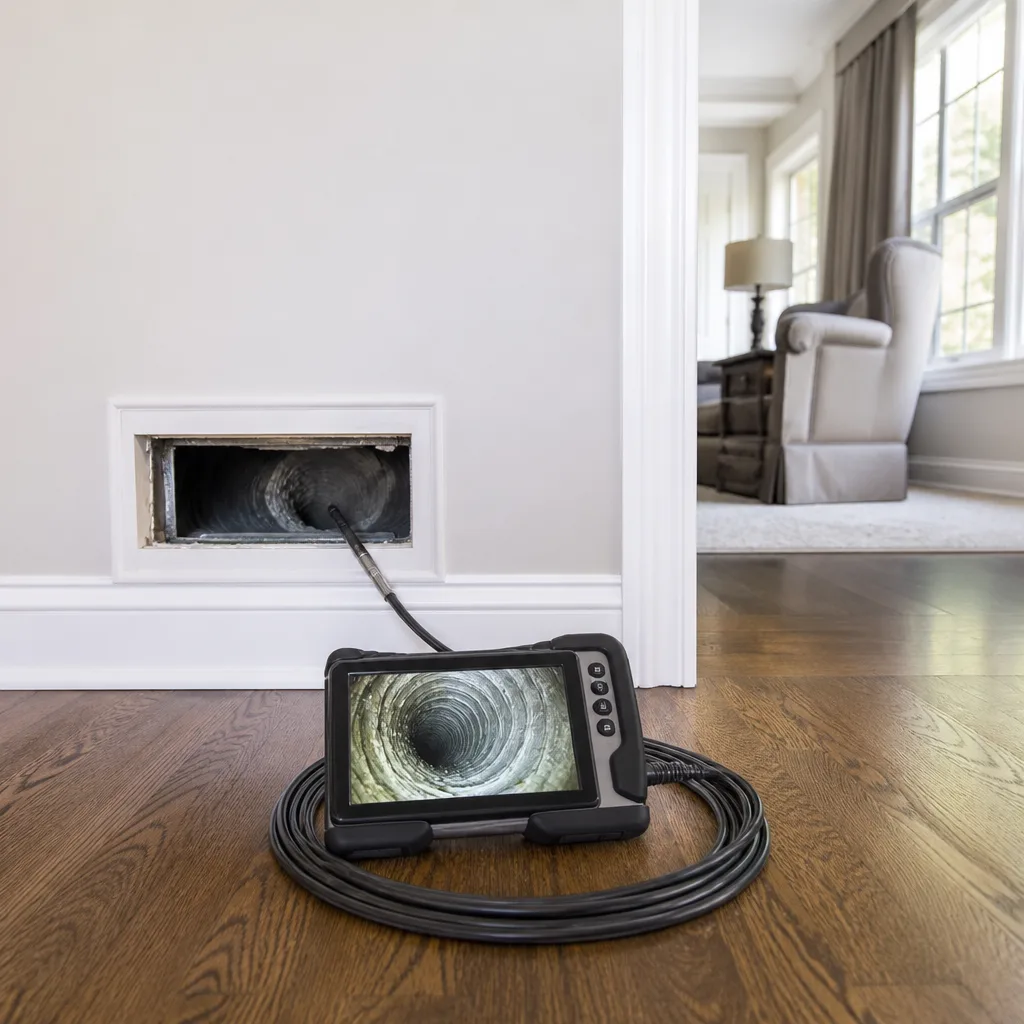 Camera inspection
 Sanitizing & deodorizing
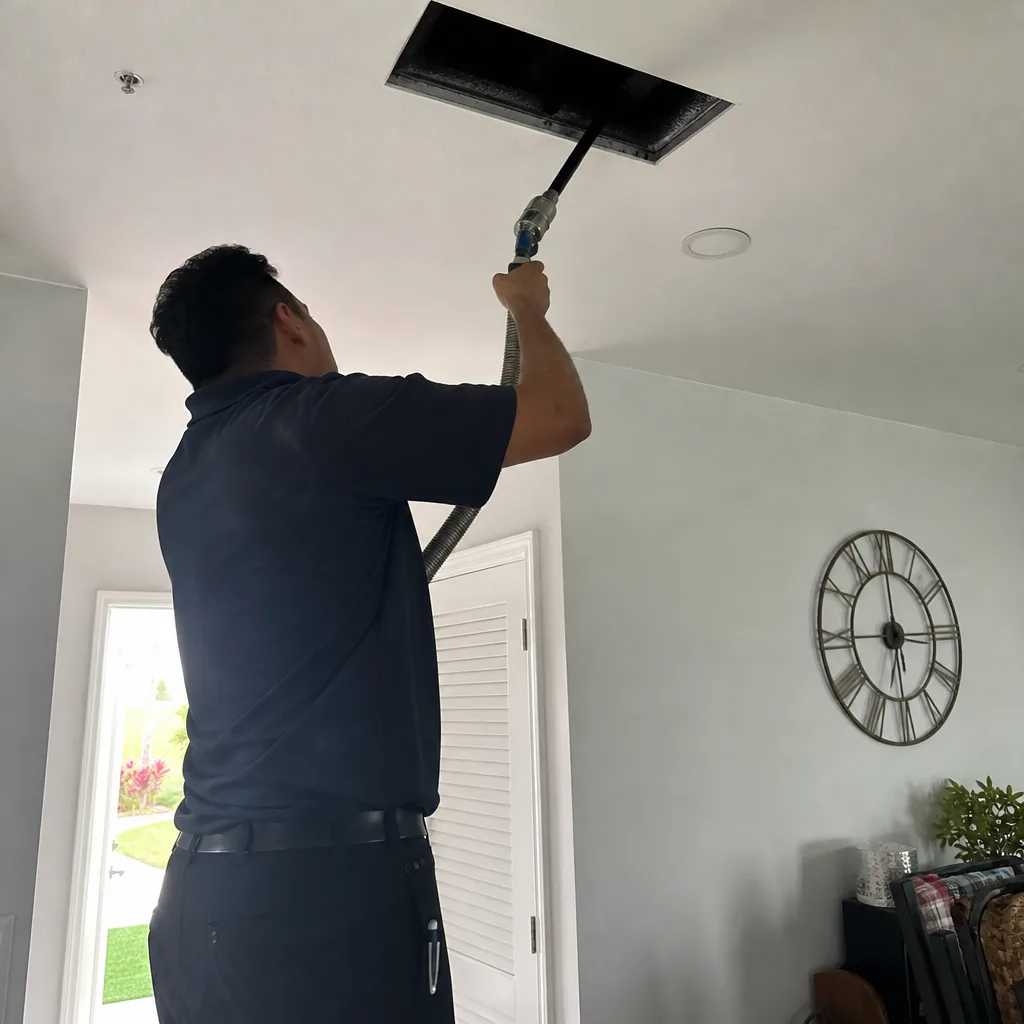
Whole-system duct and dryer vent check with before-and-after photos - you see exactly what came out of your vents
That "$99 whole-house special" is a bait ad - the real number appears once they are in your hallway, or the "clean" is a shop-vac at the register. We photograph the inside of your ducts before and after instead.
DIY vs Professional Air Duct Cleaning: The Fort Lauderdale Homeowner’s Decision Guide
A Fort Lauderdale homeowner spent $180 on a duct cleaning kit last spring, ran it for four hours on a Saturday, and two weeks later had a higher particulate reading in her living room than before she started. The brush dislodged debris the vacuum couldn’t capture, and that debris settled deeper in the system. This guide will show you exactly what DIY duct cleaning can and cannot accomplish, what it really costs in Fort Lauderdale, and why partial cleaning in our humid climate can create problems that didn’t exist before you started.
Styles & brands we work with
Quick Answer
For Fort Lauderdale homeowners, professional Air Duct Cleaning is the right choice for full-system cleaning because negative-air extraction equipment, required to remove debris without redistributing it, is not available to the public. DIY effort suits register-level and accessible return grille cleaning only, and in South Florida’s humidity, incomplete cleaning can actively worsen contamination by dislodging debris that then resettles deeper in the duct run.
Table of Contents
- What DIY Duct Cleaning Can Actually Accomplish
- What DIY Cannot Do: The Negative-Air Extraction Problem
- Why Fort Lauderdale Humidity Makes Partial Cleaning Risky
- The Honest Cost Comparison: DIY vs Professional in Fort Lauderdale
- Where DIY Maintenance Genuinely Helps Between Professional Cleanings
- How to Verify a Professional Job Met Negative-Air Standard
- Common Mistakes to Avoid
- When to Call a Professional
- Frequently Asked Questions
- The Bottom Line
What DIY Duct Cleaning Can Actually Accomplish
A homeowner with basic tools can clean the first six to twelve inches of a supply register, the return grille face, and accessible filter housings. That’s it. We’re not being dismissive, and we’re not protecting a trade secret. The physical limits are set by the length of the average human arm and the suction power of a shop vac, which tops out around 80 to 120 CFM. A professional negative-air unit runs between 2,000 and 5,000 CFM, and it connects to the duct system itself, not to the register opening.
Here’s what DIY work genuinely accomplishes:
- Register face and grille cleaning: removing visible dust and grime from the metal or plastic covers with a damp cloth, a brush, and a standard vacuum hose.
- Accessible return grille cleaning: most returns in Fort Lauderdale homes are behind a hinged or drop-in grille; pulling that grille and vacuuming the first few inches of the return boot removes loose debris.
- Filter replacement: swapping a dirty filter for a clean one is the single most helpful DIY step any homeowner can take, and it requires no special equipment.
- Visible debris removal around floor registers: pet hair, sand tracked in from the beach, and construction dust often collect right at floor register openings in Fort Lauderdale homes.
The value of these tasks is real but limited. They keep the visible surfaces clean and reduce the amount of loose debris sitting at the openings. What they cannot do is address the duct walls, the trunk line, the branch runs, or the plenum. And in our experience, those hidden surfaces are where Fort Lauderdale duct problems live, because our climate drives humidity into the system year-round and turns ordinary dust into something stickier and harder to remove.
For context on what a full professional cleaning covers, see our Air Duct Cleaning in Fort Lauderdale service page.
What DIY Cannot Do: The Negative-Air Extraction Problem
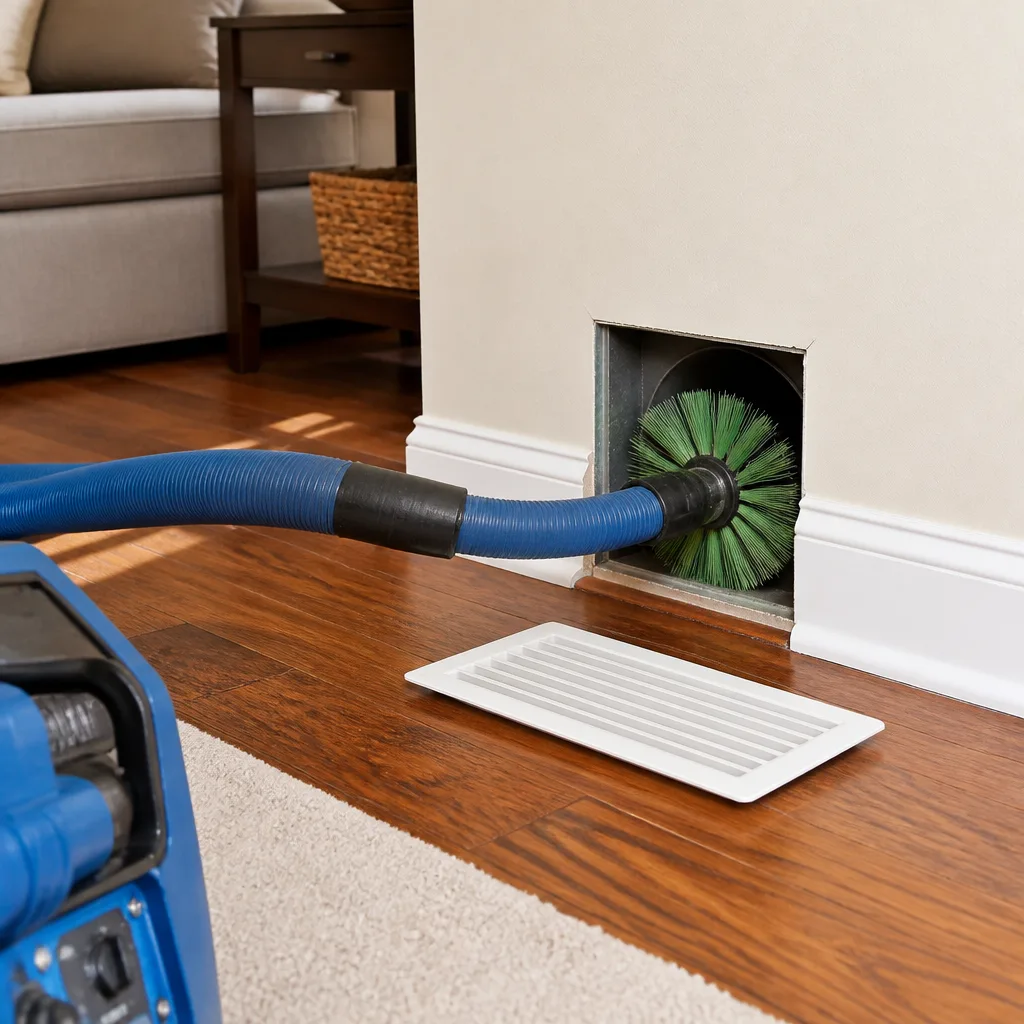
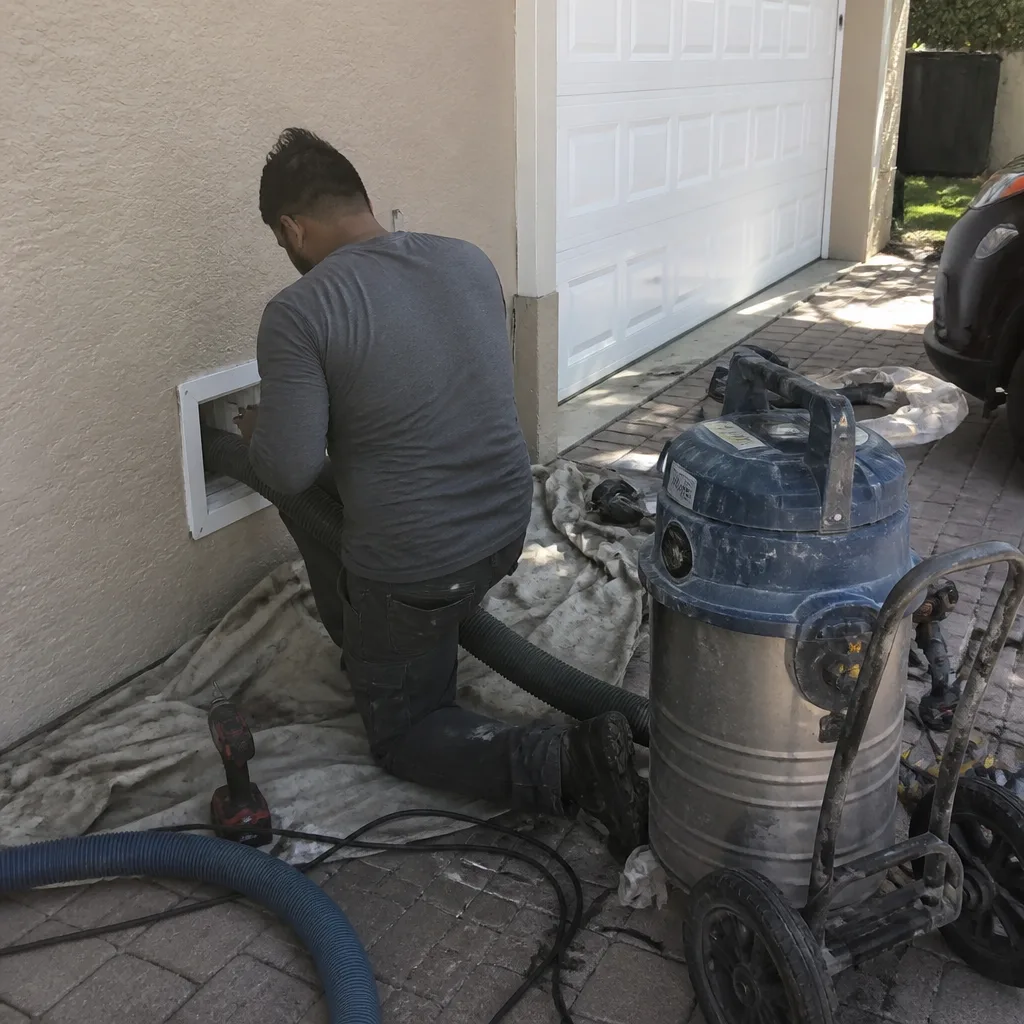
Negative-air extraction is the industry term for the process of connecting a powerful vacuum unit to the duct system so that the entire system is under suction while brushes agitate debris from the duct walls. The vacuum is pulling air out of the ducts at high volume, which means any debris knocked loose moves toward the vacuum inlet instead of drifting back into the room. A shop vac attached to a register cannot create this condition because it only pulls air through a single small opening, and the rest of the duct system remains at atmospheric pressure.
Think of it this way: if you brush dust off a shelf in your living room, some of it falls onto the bookshelf below. If you hold a powerful vacuum beneath the shelf while you brush, the dust gets pulled into the vacuum before it settles. Professional duct cleaning is the second scenario. DIY duct cleaning with a rotating brush and a shop vac is closer to the first: you’re loosening debris, but the capture side isn’t strong enough to keep it from resettling.
Professional equipment makes this possible:
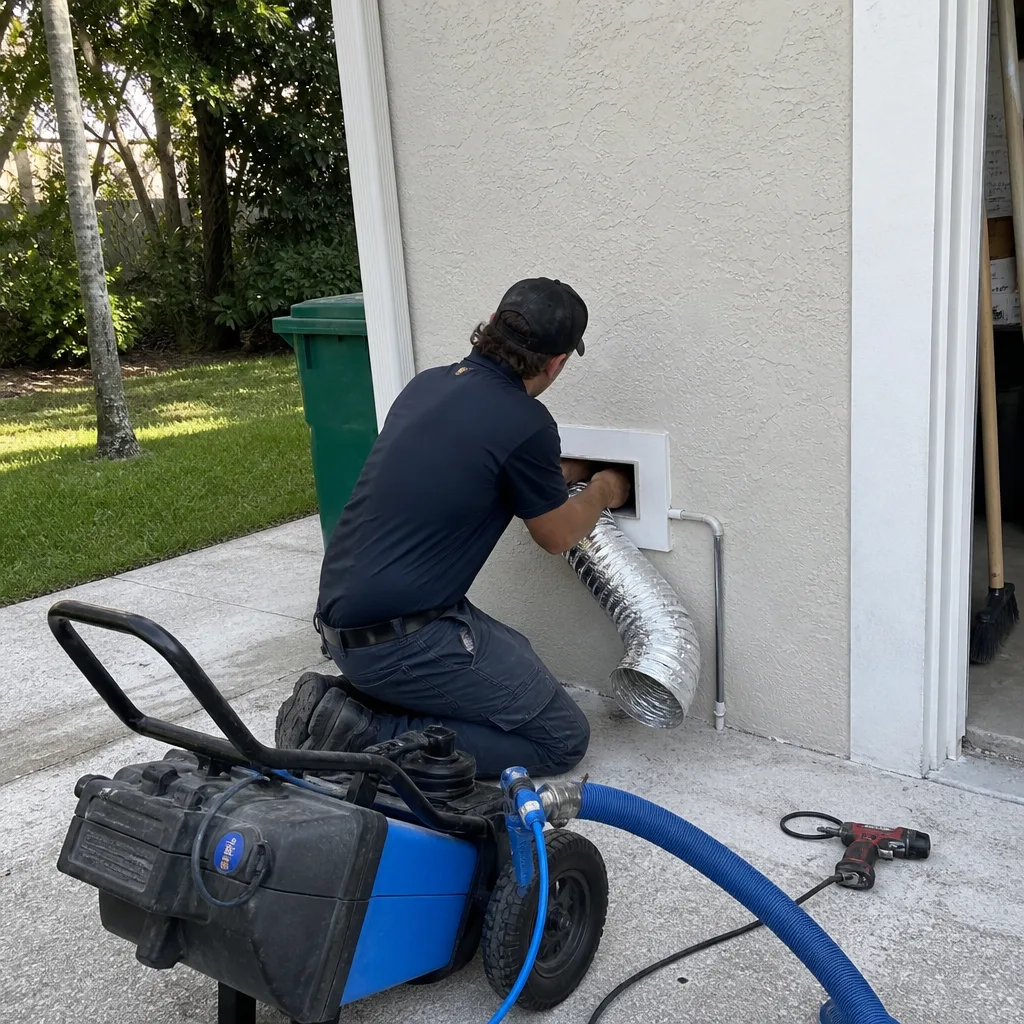
- Rotobrush rotary brush systems spin at the duct wall, mechanically dislodging adhered debris rather than just loosening loose dust.
- Nikro negative-pressure units pull 2,000+ CFM through the system, putting every duct run under suction while the brush works.
- Abatement Technologies HEPA filtration captures loosened particles before they can escape into the living space during the cleaning process.
No consumer-grade tool offers this combination. And the absence of negative-air extraction isn’t a small gap in thoroughness. It’s the difference between removing debris and redistributing it. For a Fort Lauderdale homeowner who has already spent a Saturday crawling between registers, discovering that the result was debris migration rather than debris removal is exactly the kind of outcome that leads to the “never again” feeling, and it’s a lesson we’ve heard repeated by homeowners across Broward County.
Why Fort Lauderdale Humidity Makes Partial Cleaning Risky
Fort Lauderdale’s average relative humidity hovers around 75 percent year-round, and indoor humidity in a Florida home without a whole-house dehumidifier often sits between 55 and 65 percent even with air conditioning running. That moisture changes how dust behaves inside ductwork. Dry dust falls out of the air and settles in a loose layer that can be vacuumed easily. Humid dust absorbs moisture, becomes dense and sticky, and adheres to the duct wall like a thin film.
When a DIY brush passes over that film, it scrapes some of it loose, but the shop vac doesn’t capture all of it. The loosened material, now mixed with moisture from the air, drifts through the duct system and resettles further down the run, in the trunk line, or in the plenum. The humid air aids adhesion at the new location just as it did at the old one. The result is a redistribution: debris moved from an accessible area into a less accessible one, where it now sits in contact with the same humid airstream and continues to accumulate.
This is the exact pattern behind the homeowner story we opened with. The particulate reading rose because the cleaning didn’t remove material; it relocated it. And once that material is deep in the duct run, a second DIY attempt will only move it again. Removing it for good requires negative-air extraction, which requires professional equipment.
In Fort Lauderdale specifically, this matters more than in a dry climate like Phoenix or Denver because the air itself is an active participant in the contamination process. Dust doesn’t just sit in our ducts; it bonds to them. That’s why partial cleaning here carries a specific risk that a national DIY guide, written for a homeowner in a dry region, won’t mention.
The Honest Cost Comparison: DIY vs Professional in Fort Lauderdale
Let’s put real numbers on the table. A consumer duct cleaning kit, the kind sold online and at big-box stores, runs between $80 and $200. That typically includes a flexible brush on a drill attachment and a collection canister or a hose adapter for a shop vac. Add $40 to $80 if you don’t already own a shop vac, plus $10 to $25 for replacement filters for the vac, because a standard filter clogs quickly during this kind of work.
A professional whole-system air duct cleaning in Fort Lauderdale typically runs between $300 and $600 for a home up to 3,500 square feet. Larger homes, homes with multiple systems, or systems with significant buildup fall at the higher end or beyond. The professional price includes the equipment, the labor, the disposal, and the post-job inspection.
Here’s the comparison in plain terms:
| Cost Factor | DIY Kit | Professional Cleaning |
|---|---|---|
| Equipment cost | $80 – $200 (single use) | Included in job price |
| Additional supplies | $50 – $105 (shop vac, filters) | None |
| Time cost | 3 – 6 hours of your weekend | 2 – 4 hours, you don’t do the work |
| Result on duct walls | Minimal to none | Debris removed at the wall |
| Risk of debris redistribution | High in humid air | Low with negative-air extraction |
| Guarantee | None | Written guarantee with return visit if work fails |
What are you actually buying with the professional price? You’re buying the negative-air setup, the mechanical agitation at the duct wall, the HEPA filtration that keeps loosened material out of the living space, and the labor of a trained technician who does this work every day. You’re also buying a written record that the work was done to a standard, which the DIY route cannot provide.
If cost is the deciding factor, consider that the DIY kit is not a cheaper version of the professional service. It’s a different service entirely. And in Fort Lauderdale, where the humidity complicates everything, the difference between the two outcomes isn’t cosmetic.
Where DIY Maintenance Genuinely Helps Between Professional Cleanings
None of this means homeowners should never touch their ducts. There are two scenarios where DIY maintenance adds real value, and doing them correctly actually extends the time between professional cleanings. For Seasonal Air Duct Cleaning Care for Fort Lauderdale: Year-Round Homeowner’s Guide, see our dedicated resource.
1. Register and grille maintenance
Every month or two, remove the register covers from floor and ceiling openings in occupied rooms, wipe them down with a damp cloth, and vacuum what you can see and reach inside the opening. This prevents the visible accumulation of hair and dust that builds up at the register face, and it keeps the airflow path at the opening clear. Use a hose attachment, not the bare vacuum, and don’t insert anything deeper than you can see. This work takes fifteen minutes and genuinely improves the appearance of the room and the quality of the air passing through the opening.
2. Return filter replacement
Changing the filter at the return grille is the single highest-impact DIY task a Fort Lauderdale homeowner can do between professional cleanings. In our climate, a monthly filter change is reasonable for most homes. If you’re using a high-MERV pleated filter, which we recommend for South Florida’s particulate-heavy air, check it every 30 days and replace it when it’s visibly darkened. A clean filter keeps the coil cleaner, keeps the blower running efficiently, and reduces the volume of airborne debris that ends up in the ducts in the first place. If you want to go further, a Honeywell or Aprilaire media filter cabinet installed at the air handler adds a denser filtration stage without restricting airflow.
What you should not do between professional cleanings is run a brush through the duct work, spray cleaners into the system, or use a leaf blower into a register. Each of those actions dislodges material without capturing it, and in Fort Lauderdale’s humid air, that material will find a new home deeper in the system.
For the other half of the indoor air picture, see our Dryer Vent Cleaning in Fort Lauderdale page, which covers the vent system that shares attic space with many Fort Lauderdale homes.
How to Verify a Professional Job Met Negative-Air Standard
If you hire a professional, you should know what “done right” looks like before the technician arrives. Read How to Hire a Air Duct Cleaning Contractor in Fort Lauderdale: A Step-by-Step Guide for preparation tips. Here’s the checklist, in order of importance:
- The vacuum connection is at the plenum or air handler, not at a register. A proper negative-air setup connects the vacuum truck or portable negative-air machine to the main trunk line or plenum, usually through an 8- to 12-inch access hole cut near the air handler. If the technician connects suction at a supply register only, that’s not negative-air extraction for the whole system.
- Every supply vent is blocked during cleaning. With the system under suction, each supply register should be sealed except the one being worked. This concentrates the suction on the duct run being brushed and prevents loosened debris from escaping through other openings. If the registers are left open, the suction is diluted and debris can escape.
- The brush reaches the full duct run. The technician should be feeding brush cable through each branch run from the register opening toward the trunk, and the length of cable should correspond to the length of the run. In a typical Fort Lauderdale ranch or split plan, branch runs are 10 to 30 feet. If the technician only works the first few feet at each register, the middle and far reaches of the runs are not being cleaned.
- The post-job inspection confirms the trunk line and returns. After branch runs are done, the technician should open the trunk line and show you the condition of the walls before and after. A professional will offer this, not resist it. You should be able to see the difference: bare metal where there was a dust layer before.
- The access holes are sealed properly. Any hole cut for equipment access must be closed with a proper patch and sealed, not left open or covered with tape. This is a code and efficiency issue, and it’s one of the most common short cuts in the trade.
At Kestrel Air Duct Fort Lauderdale, we follow this exact sequence on every job, and we document it. Our technicians use Nikro negative-pressure units and Rotobrush rotary brush systems, with Abatement Technologies HEPA filtration on the capture side. The post-job inspection is part of the work, not an add-on, and the written price you have before we start covers all of it.
Common Mistakes to Avoid
- Using a brush kit without negative-air capture. This is the single most common DIY error we see in Fort Lauderdale, and it’s the one that leads to the particulate increase described at the start of this guide. Brushing without full-system suction redistributes debris rather than removes it.
- Spraying cleaning solutions or deodorizers into the ducts. Liquid products in a humid duct system create a damp surface that attracts dust and can foster mold growth on organic debris. Fort Lauderdale ducts are humid enough without adding moisture deliberately.
- Using a leaf blower into a supply register. Leaf blowers push air into the system at high pressure, which forces debris further into the duct run and can break loose poorly sealed joints. The result is debris in wall cavities and a system that’s dirtier than before.
- Buying a “duct cleaning” service at a price based on a per-vent count. This pricing model in South Florida’s market is almost always a bait-and-switch. The advertised per-vent price looks low, but the on-site total balloons after the “required” add-ons. Whole-system pricing in the $300 to $600 range for a typical home is the honest structure.
- Skipping the post-job inspection. The work isn’t done until you’ve looked at the trunk line and confirmed the duct walls are clean. Any reputable company will show you; any company that won’t is hiding something.
- Assuming visible register cleanliness means the system is clean. Fort Lauderdale homes often have clean-looking registers and heavily coated duct walls because the air volume at the register blows surface dust off while the laminar flow in the duct run lets debris accumulate.
When to Call a Professional
Call a professional when you see visible dust accumulation on duct walls during a filter change, when you notice dust settling on surfaces within days of cleaning, when allergy symptoms track with HVAC runtime, or when you’ve owned the home for more than three years without a duct cleaning on record. Fort Lauderdale’s climate works against you here, and the longer debris bonds to the duct walls, the harder the removal becomes. If you’ve tried a DIY kit and your dust situation got worse, the debris has already redistributed, and a second DIY attempt won’t fix it. Kestrel Air Duct Fort Lauderdale offers free estimates in Fort Lauderdale, call (754) 354-9798, and the written price is in your hands before any work begins.
Frequently Asked Questions
A whole-system air duct cleaning in Fort Lauderdale typically costs between $300 and $600 for a home up to 3,500 square feet. Larger homes or systems with significant buildup run higher. Call (754) 354-9798 for an exact quote; estimates are free and the written price is guaranteed before work starts.
You can clean the visible areas at the register openings and the return grille face, but a shop vac cannot provide the negative-air extraction needed to remove debris from the full duct system. In Fort Lauderdale’s humid air, brushing without full-system capture redistributes debris deeper into the system rather than removing it.
Cheap quotes in the Fort Lauderdale market almost always use a per-vent price that balloons with on-site add-ons, or they skip the negative-air setup entirely and do a register-level vacuuming that looks like cleaning but doesn’t address the duct walls. The honest whole-system price for a typical home sits between $300 and $600.
Ask to see the trunk line before and after the cleaning. The technician should open the main trunk and show you the duct walls. Bare metal after the job means the work was done to standard. A refusal to show you, or an inspection that only covers the first few feet at each register, means the full system wasn’t cleaned.
In Fort Lauderdale’s environment, every three to five years is a reasonable interval for most homes. Homes with pets, high occupant counts, ongoing renovations, or residents with respiratory conditions may benefit from more frequent service. Between professional cleanings, monthly filter changes and register cleaning extend the interval.
Ask for a written whole-system price before the appointment, ask whether the job uses truck-mounted or portable negative-air extraction, ask whether every supply vent is blocked during cleaning, and ask to see the trunk line before and after. A company that answers all four questions directly is offering a legitimate service. Call (754) 354-9798 and we’ll answer all four on the phone.
The Bottom Line
Air duct cleaning in Fort Lauderdale is not a DIY project. The equipment required for full-system negative-air extraction isn’t available to homeowners, and partial cleaning in our humid climate redistributes debris rather than removes it. DIY effort earns its keep at registers, grilles, and filters, where it genuinely extends the time between professional cleanings. For the duct system itself, a written-price professional cleaning between $300 and $600 is the honest path, and the written guarantee that backs it is the difference between a job and a result. When you’re ready, call (754) 354-9798 for a free estimate.
Written by Dale Whitmore, Owner at Kestrel Air Duct Fort Lauderdale, serving Fort Lauderdale since 2004. Explore more guides & resources on our blog.
See the difference
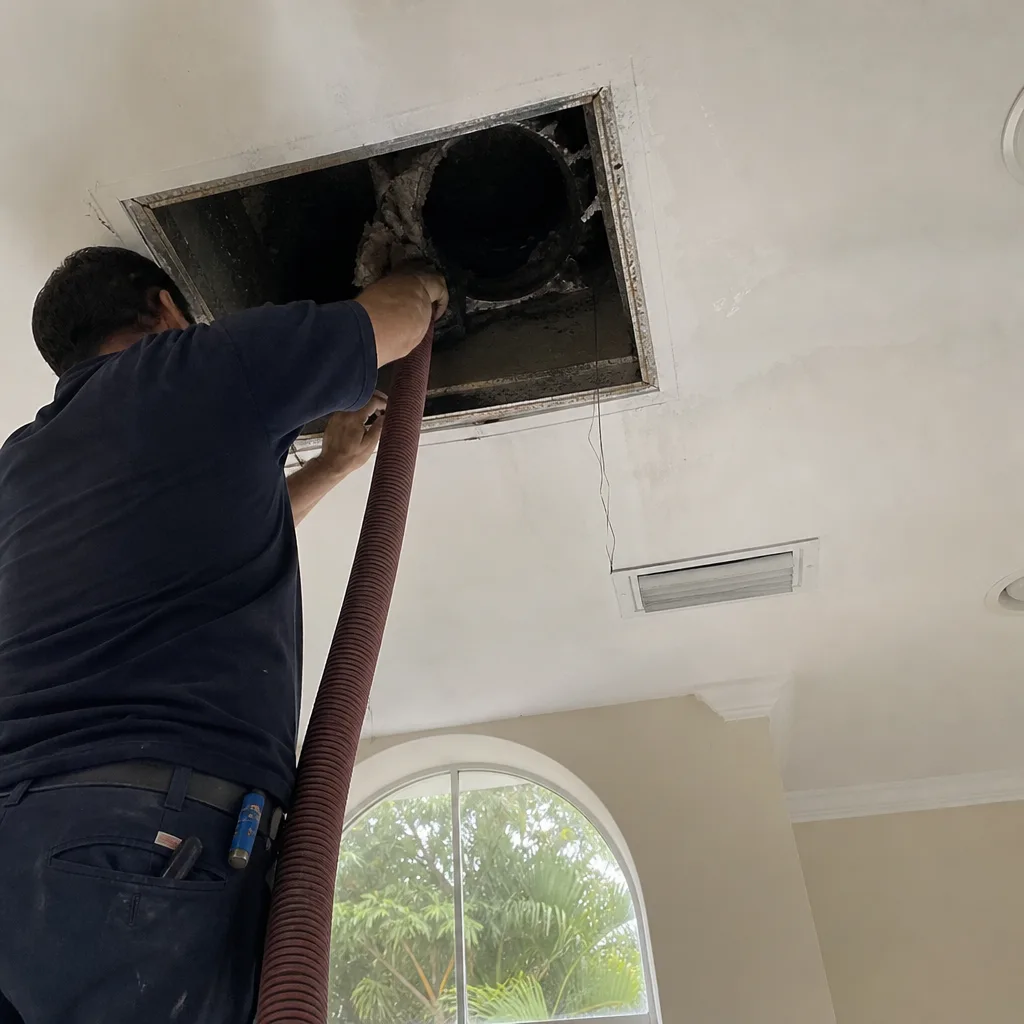 Before
 After
After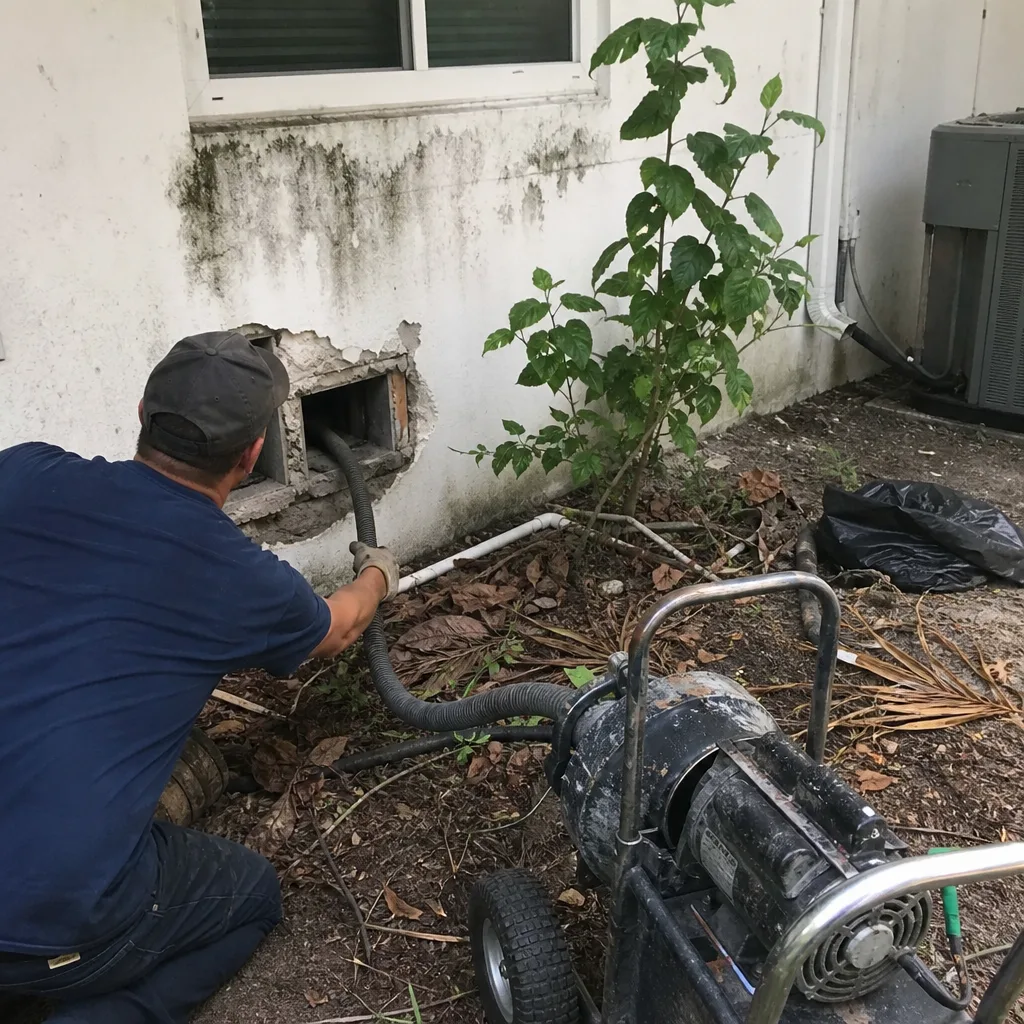 Before
 After
After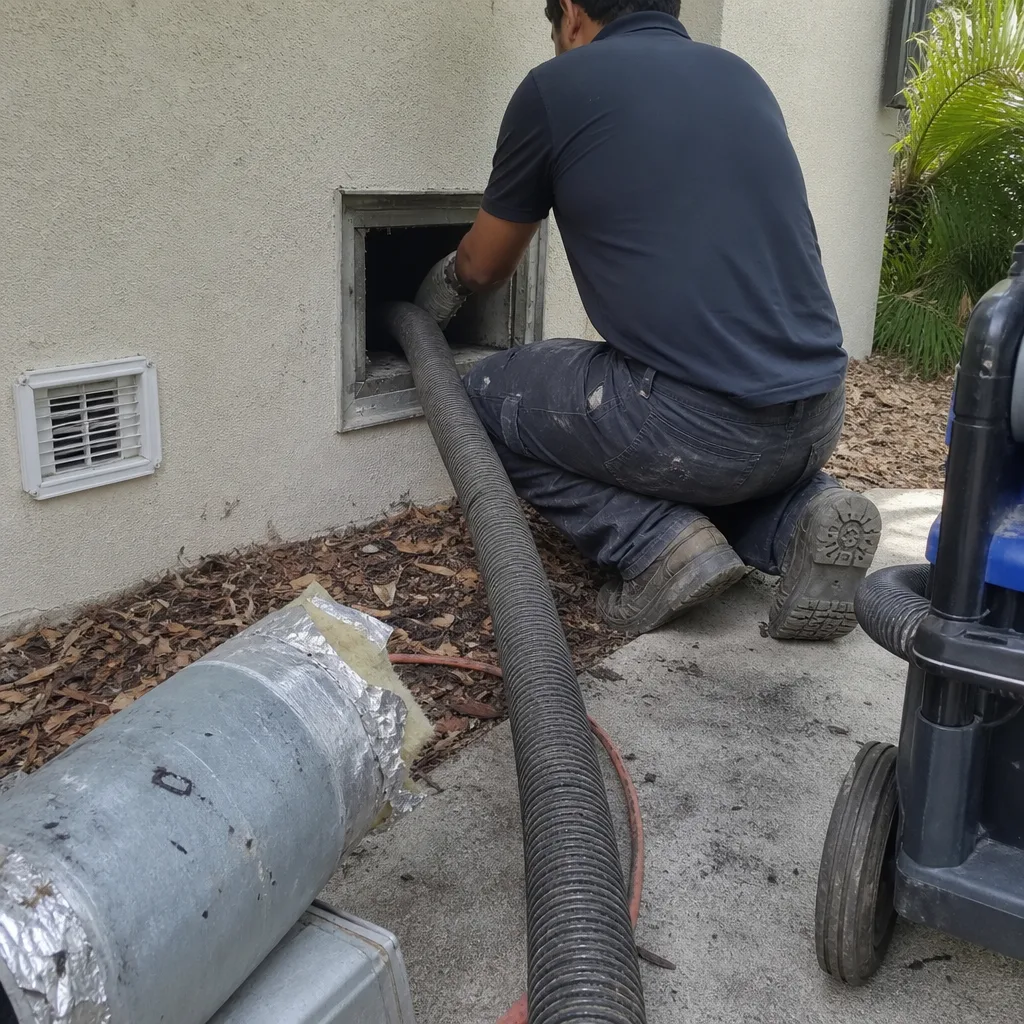 Before
 After
After