
Last updated October 15, 2026
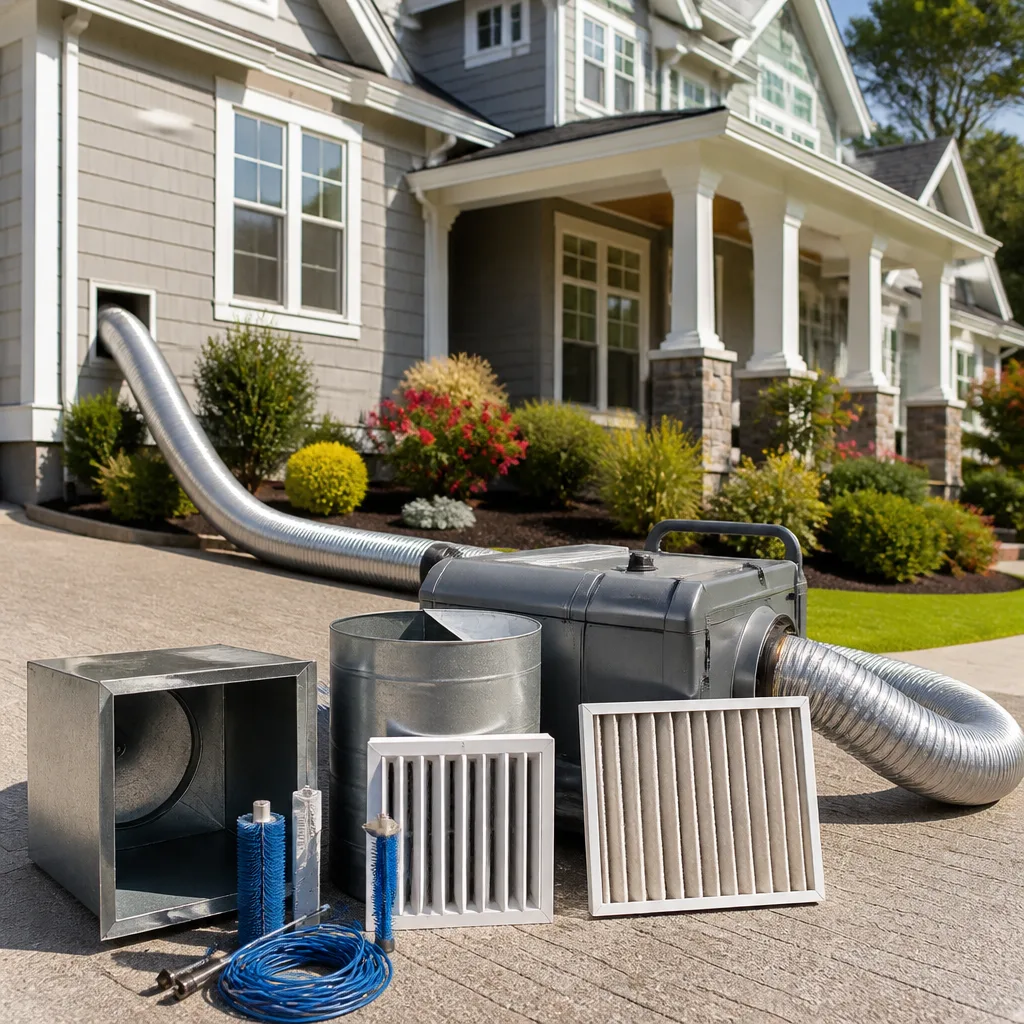 Whole-home duct cleaning
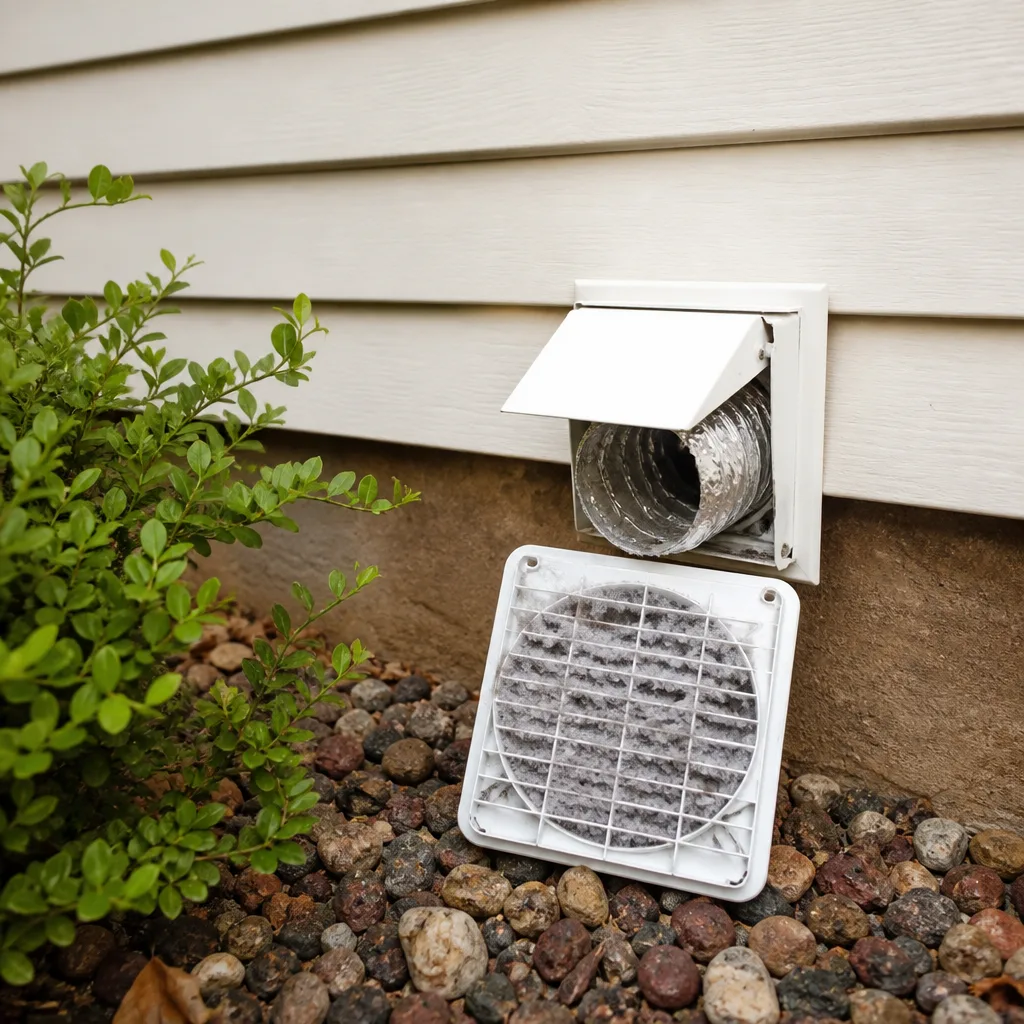 Dryer vent cleaning
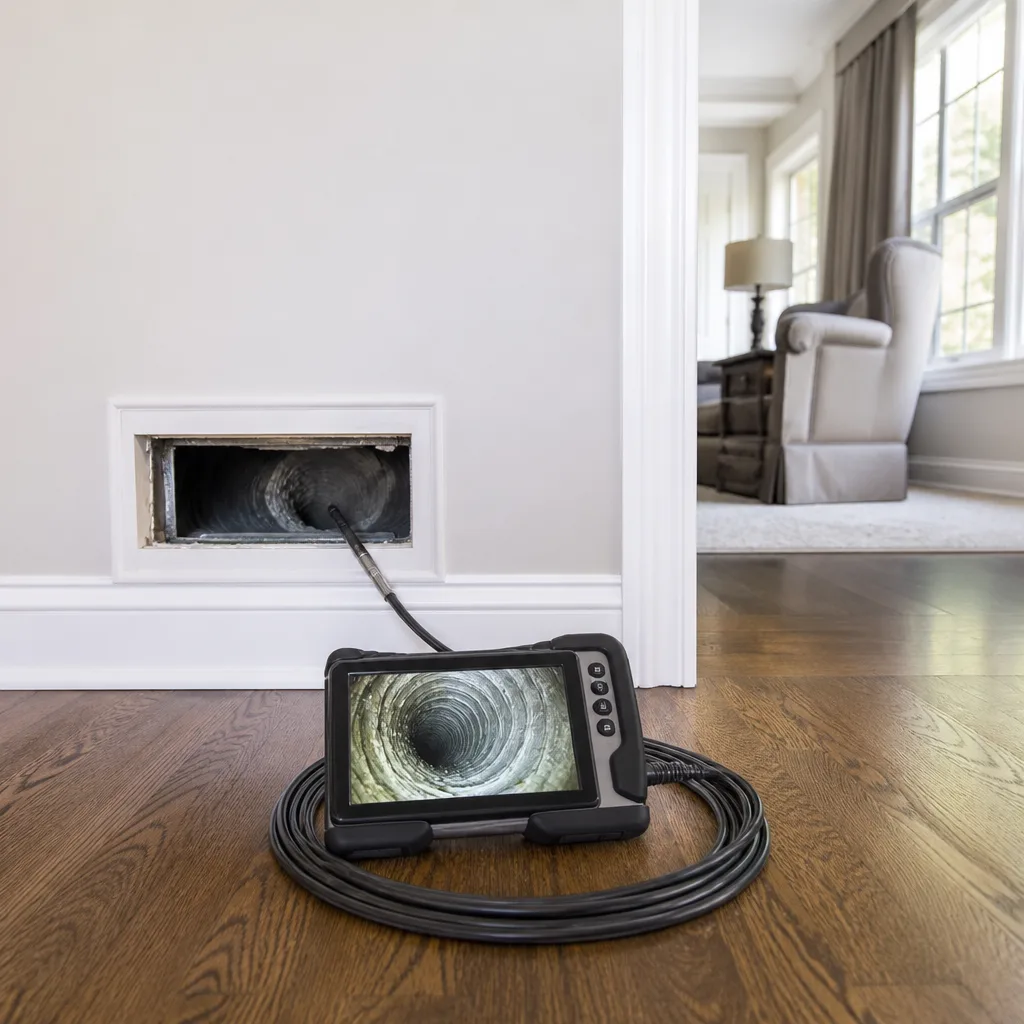 Camera inspection
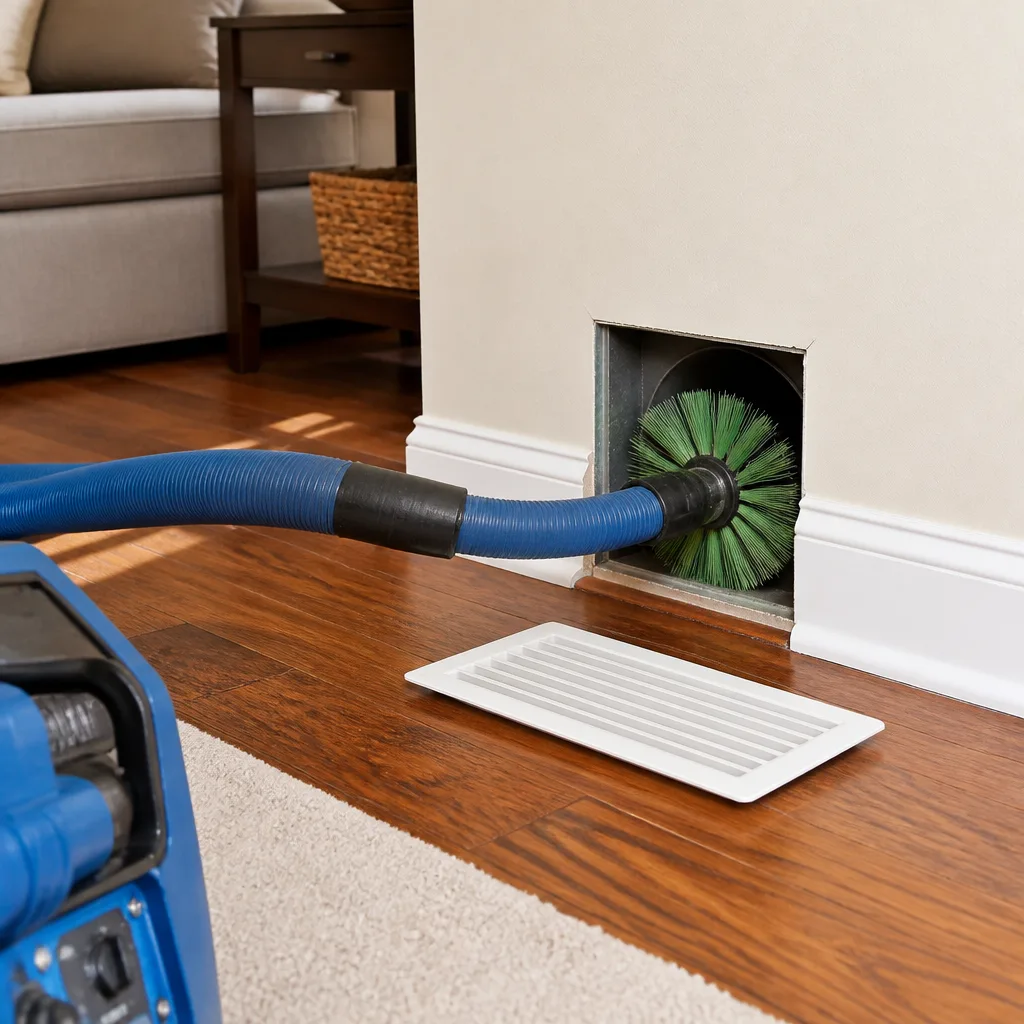 Sanitizing & deodorizing
Whole-system duct and dryer vent check with before-and-after photos - you see exactly what came out of your vents
That "$99 whole-house special" is a bait ad - the real number appears once they are in your hallway, or the "clean" is a shop-vac at the register. We photograph the inside of your ducts before and after instead.
The Complete Guide to Air Duct Cleaning in Fort Lauderdale
Most national guides say clean your ducts every 3 to 5 years. Fort Lauderdale homes running AC 11 months a year accumulate the same particulate load in 18 months that a Chicago home sees in four years. Add 80% average humidity, salt air off the Atlantic, and a hurricane season that pushes debris through every exterior gap, and you have duct conditions no generic advice addresses. This guide is written from the ground up for Fort Lauderdale specifically. By the end, you’ll know exactly what your ducts are up against here, what honest cleaning costs in this market, how to read an inspection photo, and what a written scope of work must contain before anyone touches your system.
Quick Answer
Air duct cleaning in Fort Lauderdale typically costs between $425 and $1,100 for a whole-home system, depending on square footage, number of vents, and the level of contamination. Homes in Fort Lauderdale should schedule cleaning every 2 to 3 years, not the 3 to 5 years national guides suggest, because constant AC runtime and coastal humidity compress the contamination timeline. A legitimate cleaning uses negative-air extraction with brush agitation, not a shop vac, and the price should be in writing before work begins.
Styles & brands we work with
Table of Contents
- Why Fort Lauderdale Ducts Are Different From the Rest of the Country
- What Actually Happens During a Professional Duct Cleaning
- How Much Air Duct Cleaning Costs in Fort Lauderdale (2025-2026)
- Three Fort Lauderdale-Specific Triggers That Should Move Cleaning Up Your Schedule
- What a Written Scope of Work Must Include Before the Technician Touches Your System
- How to Read an Honest Before/After Inspection
- What You Can Safely Do Yourself vs. What Requires a Professional
- Filtration and Maintenance Between Professional Cleanings
Why Fort Lauderdale Ducts Are Different From the Rest of the Country
Fort Lauderdale sits in a subtropical climate where the air conditioner is not a seasonal luxury. It’s infrastructure. Your system moves conditioned air through ductwork for roughly 10 to 11 months of the year, and during those months it’s pulling in air that carries salt, sand, and constant moisture. National duct cleaning advice assumes a split between heating and cooling seasons, with dormant periods that let duct interiors dry out. That assumption fails completely in coastal South Florida.
Three local factors change the math on duct cleaning in Fort Lauderdale:
- Salt air corrosion: Salt particles carried in ocean breezes work their way into duct interiors, especially near return air intakes. Salt is hygroscopic, which means it attracts and holds moisture. A thin salt film inside a flex duct becomes a damp surface where dust sticks and microbial growth takes hold faster than it would in a dry climate.
- Year-round AC runtime: In Fort Lauderdale, your system runs nearly continuously from March through November, and intermittently in the two mild months that pass for winter. More air movement equals more debris passing through the ducts. A home here can move the same volume of air in 18 months that a northern home moves in four years.
- Humidity inside flex duct: Fort Lauderdale’s average relative humidity runs above 80% for most of the summer. Flex duct, used in most South Florida homes, is permeable enough that moisture works its way into the inner liner. When dust accumulates on that slightly damp liner, you get a paste that adheres to the walls rather than blowing through. That adhered layer is what a shop vac will never remove. It requires mechanical agitation.
In our experience cleaning ducts across Fort Lauderdale, we regularly find a gray, slightly tacky film inside flex duct in homes within two miles of the coast. That film is salt plus humidity plus household dust, and it’s the reason generic cleaning methods fail here. A negative-air extraction system paired with brush agitation handles it because it dislodges the film at the duct wall and pulls it out under vacuum at the same time, so it never re-enters living spaces.
What Actually Happens During a Professional Duct Cleaning
A real professional cleaning in Fort Lauderdale follows a defined sequence. Understanding it helps you spot the difference between a genuine service and a shop-vac job with a coupon attached to it.
- System inspection with camera. The technician should start by running a camera through the main trunk line and several branch runs. You should see the images yourself, before any cleaning begins. This establishes what’s actually in your ducts, not what a sales script assumes.
- Sealing the register openings. Each supply register is covered or sealed so that the vacuum created by the negative-air machine is directed through the ductwork rather than pulling air randomly through your home.
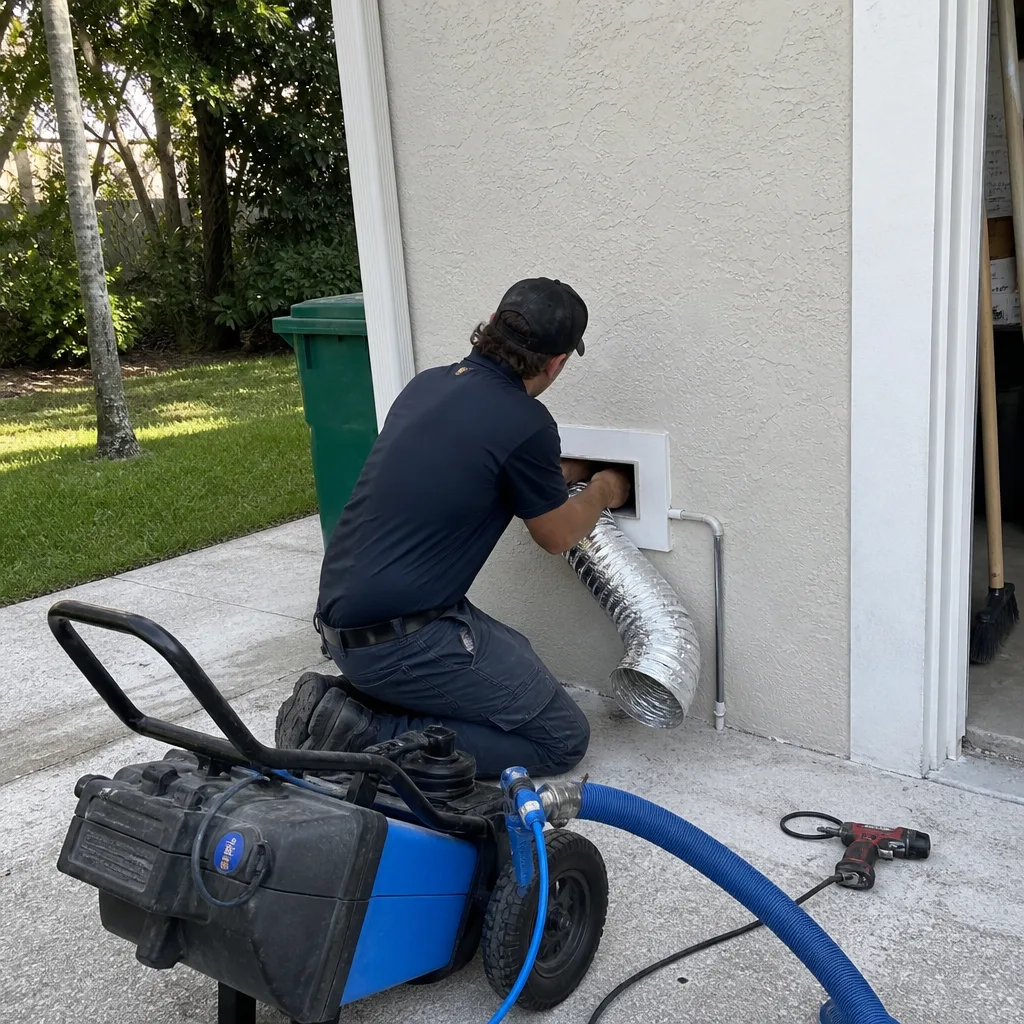
- Connecting the negative-air unit. A negative-air extraction unit, which is essentially a high-powered vacuum with HEPA filtration, attaches to the duct system, creating negative pressure inside the ducts. Negative-air extraction means drawing contaminated air out under vacuum so debris doesn’t re-enter living spaces. It’s the opposite of blowing air in and hoping the dust goes somewhere useful.
- Brush agitation at the duct wall. While the negative-air unit pulls air out, a rotary brush system like Rotobrush travels through the ducts. Brush agitation means physically scrubbing the inner walls of the duct. The brush dislodges the adhered film that a vacuum alone cannot move. The dislodged material is immediately pulled out by the negative pressure.
- HEPA filtration at the machine. High-quality systems, including those built by Abatement Technologies, pass all exhaust air through HEPA filters, which trap 99.97% of particles down to 0.3 microns. HEPA filtration keeps loosened particles out of the living space during cleaning. This is the difference between cleaning your ducts and redistributing their contents through your home.
- Post-cleaning camera verification. The same camera runs the same sections again. You compare before and after images side by side. If the walls of the duct still show the gray film, the job is not done.
This sequence takes four to six hours for a typical Fort Lauderdale home, not the 45 minutes a low-ball operator will quote. The companies doing the $129 whole-house specials are not running HEPA-filtered negative-air machines, because that equipment costs real money to own and maintain. They are running a shop vac into a few registers and calling it done.
For a full explanation of what this service involves in this specific market, see our page on Air Duct Cleaning in Fort Lauderdale.
How Much Air Duct Cleaning Costs in Fort Lauderdale (2025-2026)
In the Fort Lauderdale market, a legitimate whole-home air duct cleaning runs between $425 and $1,100. That is the honest range for a full system clean using negative-air extraction and rotary brush agitation, including the supply and return ducts, the air handler cabinet, and the blower assembly. Anything quoted below $400 for a whole home in Fort Lauderdale signals either a down-payment quote that balloons at the door or a cleaning so superficial it will not show a difference in either the camera images or your indoor air quality.
Here is how pricing typically breaks down by home size in Fort Lauderdale:
| Home Size | Typical Vent Count | Expected Price Range | Time on Site |
|---|---|---|---|
| Up to 1,500 sq ft | 8-12 vents | $425 – $650 | 3-4 hours |
| 1,500 – 2,500 sq ft | 12-18 vents | $575 – $825 | 4-5 hours |
| 2,500 – 4,000 sq ft | 18-25 vents | $750 – $1,100 | 5-6 hours |
| 4,000+ sq ft | 25+ vents | $1,000 – $1,400+ | 6+ hours |
Several legitimate variables affect where your home lands in those ranges:
- Number of HVAC systems. A single-family home with one air handler costs less than a two-story home with two independent systems, even if square footage is similar.
- Duct accessibility. Older Fort Lauderdale homes with flat roofs and difficult attic access add time and therefore cost. Access through a small scuttle hole slows everything down.
- Degree of contamination. A system that has never been cleaned in a 20-year-old home carries more adhered film than a 5-year-old system that has been maintained. A heavier load means more brush passes and more time.
- Post-construction or post-hurricane contamination. If drywall dust or hurricane debris has entered the system, the cleaning requires additional passes to clear fine particulate that adheres aggressively.
One thing that should never happen is a per-vent upcharge. A written quote should be a single flat price for the whole system, agreed before work begins. If a company quotes a low base and then adds per-vent fees at the door, that’s not legitimate pricing. That’s the bait-and-switch that gives this trade its reputation.
Three Fort Lauderdale-Specific Triggers That Should Move Cleaning Up Your Schedule
National schedules say every 3 to 5 years. In Fort Lauderdale, the baseline should be every 2 to 3 years. But certain events should move a cleaning up immediately, regardless of the calendar. These are the three we tell Fort Lauderdale homeowners to watch for:
1. Post-hurricane debris intrusion
When a hurricane or tropical storm passes through Fort Lauderdale, exterior pressure changes and wind-driven rain force debris into places it would not normally reach. Roof vents, soffit gaps, and even slightly loose duct connections let in leaves, sand, and fine organic material. After a storm, that organic matter sits in the warm, damp duct environment and becomes a growth medium. If you rode out a significant storm with your AC running, or if you shut the system down entirely and let the home sit closed, schedule an inspection. Debris that enters ducts during a storm does not exit on its own.
2. Remodel dust from stucco or drywall
Fort Lauderdale homes undergo constant renovation, and South Florida construction runs heavily on stucco and drywall. Both materials produce fine particulate that will defeat a standard air filter. During renovation, contractors should seal supply and return registers, and many do not. The dust that enters the system while the AC runs during construction coats the duct walls and the evaporator coil. Once construction is complete, that dust re-enters the living space on every cycle. Any significant remodel, whether a kitchen tear-out or a stucco re-coat, is a trigger for a professional cleaning.
3. Snowbird vacancy periods
Fort Lauderdale has a significant seasonal population. When a home sits vacant from May through October with the AC set high or turned off entirely, the ductwork stagnates. Stagnant, warm, humid air inside ducts is exactly where microbial growth takes hold. A snowbird returning in November may notice a musty smell on first cycle, nasal irritation, or visible dust from registers. That is the duct system telling you what grew while no air was moving. We recommend running the fan for an hour before returning full-time, and scheduling a professional inspection if any odor persists.
What a Written Scope of Work Must Include Before the Technician Touches Your System
Every legitimate duct cleaning company in Fort Lauderdale should provide a written scope of work before starting. This document tells you exactly what you are paying for, what will be done, and what will not be done. Its absence is a red flag. Here is what the scope should include in plain language:
- A firm, total price in dollars. Not an estimate, not a range, not a starting price. A specific dollar figure for the complete job. If the document says “starting at,” that’s not a scope of work. That’s a sales script.
- Each component being cleaned. The scope should name the supply ducts, return ducts, air handler cabinet, blower assembly, and filter housing. If any component is excluded, it should say so explicitly.
- The method being used. Look for language describing negative-air extraction and brush agitation. If the scope only says “vacuum cleaning,” ask what kind of vacuum and what creates the suction. A shop vac is not a negative-air system.
- The equipment brand or type. A legitimate company will tell you what they run. Names like Rotobrush, Nikro, and Abatement Technologies indicate purpose-built industrial equipment, not something rented from a big-box store.
- Time on site. A realistic scope will show a defined time window of several hours. Any scope promising a whole-home cleaning in under two hours describes a visual inspection, not a cleaning.
- Post-cleaning verification. The scope should state that before and after camera images will be provided, and that you can view them before payment.
- The guarantee in writing. The Kingswell Guarantee, which every Kestrel Air Duct Fort Lauderdale job carries, means a written price before work begins, a defined arrival window, a clean job site, and a written guarantee on the work, with a free return visit if the work fails within the guarantee period. If a company says “we guarantee it” but will not put that in writing, it doesn’t mean anything.
Certain phrases signal a contractor who plans to change the price at the door. Watch for: “subject to inspection,” “additional vents may apply,” “that’s our basic package,” and “we’ll see what we find.” A written scope of work should leave no room for discovery-based pricing. The technician’s job is to perform the work described in the document, not to renegotiate it in your driveway.
How to Read an Honest Before/After Inspection
Camera inspection is the only way to verify duct cleaning was actually performed. But not every set of photos proves anything. Here is how to read them like someone who has seen hundreds of these inspections in Fort Lauderdale homes.
What the technician’s camera should show you
- The same location before and after. A legitimate comparison shows the same section of duct, from the same angle, at the same distance. If the “before” photo shows the main trunk and the “after” photo shows a branch run, the comparison is meaningless.
- The duct wall itself, not just the floor. Debris settles on the bottom of horizontal runs, but the gray adhered film we described earlier coats the entire wall. An after photo that shows only a clean-looking floor but blurry walls might be hiding exactly what the cleaning was supposed to remove.
- Focus and clarity. If the after photos are noticeably sharper than the before photos, ask why. The camera did not get better during the cleaning. Clarity differences can hide shading that a sharper image washes out.
- Before photos showing actual contamination. A technician who runs 12 feet of camera through a system and captures nothing but clean metal on the before pass has either found the cleanest ducts in Fort Lauderdale or has not explored the system. Real before photos from real Fort Lauderdale homes show dust, the gray salt-humidity film, and often construction debris.
What photos mean without airflow measurements
Here is the part most homeowners miss. A camera shows what the duct walls look like. It does not tell you whether air is moving correctly through the system. Two things matter: static pressure and airflow at the registers. A professional cleaning should include a pressure measurement before and after, and ideally an airflow reading at several registers. If a company shows you sparkling after photos but the airflow readings are identical or worse, the system looks clean but performs the same.
In older Fort Lauderdale homes with original ductwork, cleaning sometimes reveals leaks at duct joints that the debris was partially sealing. A thorough technician measures airflow and tells you what they found. They don’t just hand you a photo album and an invoice.
What You Can Safely Do Yourself vs. What Requires a Professional
There are exactly three things a homeowner in Fort Lauderdale should do themselves regarding ductwork: change the filter, keep the registers clear, and monitor for symptoms. Everything else requires professional equipment and access. Here is why.
Safe DIY tasks
- Change the filter on schedule. In Fort Lauderdale’s year-round AC climate, check the filter monthly and replace it whenever it is visibly discolored, typically every 2 to 3 months depending on home conditions and filter grade. Use at least a MERV 8 filter for this climate.
- Keep supply registers and return grates clear. Furniture, rugs, and stored boxes over registers restrict airflow and create pressure imbalances that pull unconditioned, humid attic air into the system through any gaps. Every register should have clear space for air to move.
- Watch and smell. If you notice dust settling unusually quickly after cleaning, a musty odor on startup, or visible particles blowing from registers during the first minute of a cycle, those are indicators that the system needs professional attention.
Tasks that require a professional
Do not attempt to clean the inside of your ducts yourself. A shop vac with a long hose reaches maybe four feet into a typical trunk line. It removes loose debris near the opening and leaves everything else, including the adhered film that the brush agitation and negative-air extraction combination is designed to remove. Worse, do-it-yourself attempts can dislodge debris deeper into the system, push it toward the air handler, or damage the inner liner of flex duct, which then needs repair or replacement.
The air handler is also off limits. Opening the cabinet and cleaning the evaporator coil requires tools, experience, and an understanding of the refrigerant lines you are working around. A damaged coil costs thousands to replace.
For dryer vents, which share the same professional cleaning requirements, see our page on Dryer Vent Cleaning in Fort Lauderdale.
Filtration and Maintenance Between Professional Cleanings
Professional cleaning resets the system. Filtration and habits determine how long it stays clean. In Fort Lauderdale’s conditions, what happens between cleanings matters as much as the cleaning itself.
The most significant variable is filter discipline. A MERV 8 filter captures most household dust and protects the ductwork from re-contamination. Some Fort Lauderdale homeowners, especially those with allergies or pets, upgrade to MERV 11 or higher. A higher MERV rating filters more, but it also increases pressure drop, which matters in systems already working hard in the Florida heat. Match the filter to what your system can handle. When in doubt, MERV 8 to MERV 11 is the practical range for most South Florida homes.
For homeowners who want cleaner air between professional visits, whole-home filtration products from Honeywell, Aprilaire, and Guardsman offer a meaningful step up from standard one-inch filters. These systems use media cabinets or electronic filtration to capture more of the fine particulate that makes it through standard filters. They don’t replace duct cleaning, but they slow the re-accumulation of material on duct walls.
Two Fort Lauderdale-specific habits also help. First, keep bathroom exhaust fans running for 20 minutes after showers to reduce the humidity load entering the air handler. Second, if you run the AC for most of the year rather than opening windows, you will see slower re-contamination, because outdoor salt and debris are not entering through open windows and being pulled into the return air.
When you are ready to discuss your system or schedule an inspection, start with our Kestrel Air Duct Fort Lauderdale home page for an overview of how we work.
Common Mistakes to Avoid
- Hiring a company that quotes per vent. Legitimate whole-system pricing is a flat dollar figure for the job described. Per-vent pricing creates an incentive to find more vents than you have.
- Accepting a quote over the phone that changes at the door. A written quote means a written quote. If the technician arrives and the price changes, the original number was never real. Fort Lauderdale homeowners are among the most affected by this practice in the country because the market is so large and the barrier to entry for a shop-vac operation is so low.
- Paying for a cleaning without seeing before and after photos. A legitimate cleaning produces visual proof. If no camera was run, no one can say what was cleaned.
- Scheduling a cleaning without asking about equipment. A company using professional-grade Rotobrush brush agitation and a Nikro or Abatement Technologies negative-air unit will tell you. A company running a shop vac will avoid the question. Ask directly.
- Believing that duct cleaning alone fixes airflow problems. Duct cleaning removes contamination. It does not repair disconnected runs, crushed flex duct, or an undersized return. A thorough technician will tell you the difference. A salesperson will not.
- Moving into a newly purchased Fort Lauderdale home and skipping the inspection. Previous owners leave behind their dust, their pets’ residue, and sometimes their construction debris. A post-purchase duct inspection before you unpack is the cheapest moment to learn what you are breathing.
See the difference
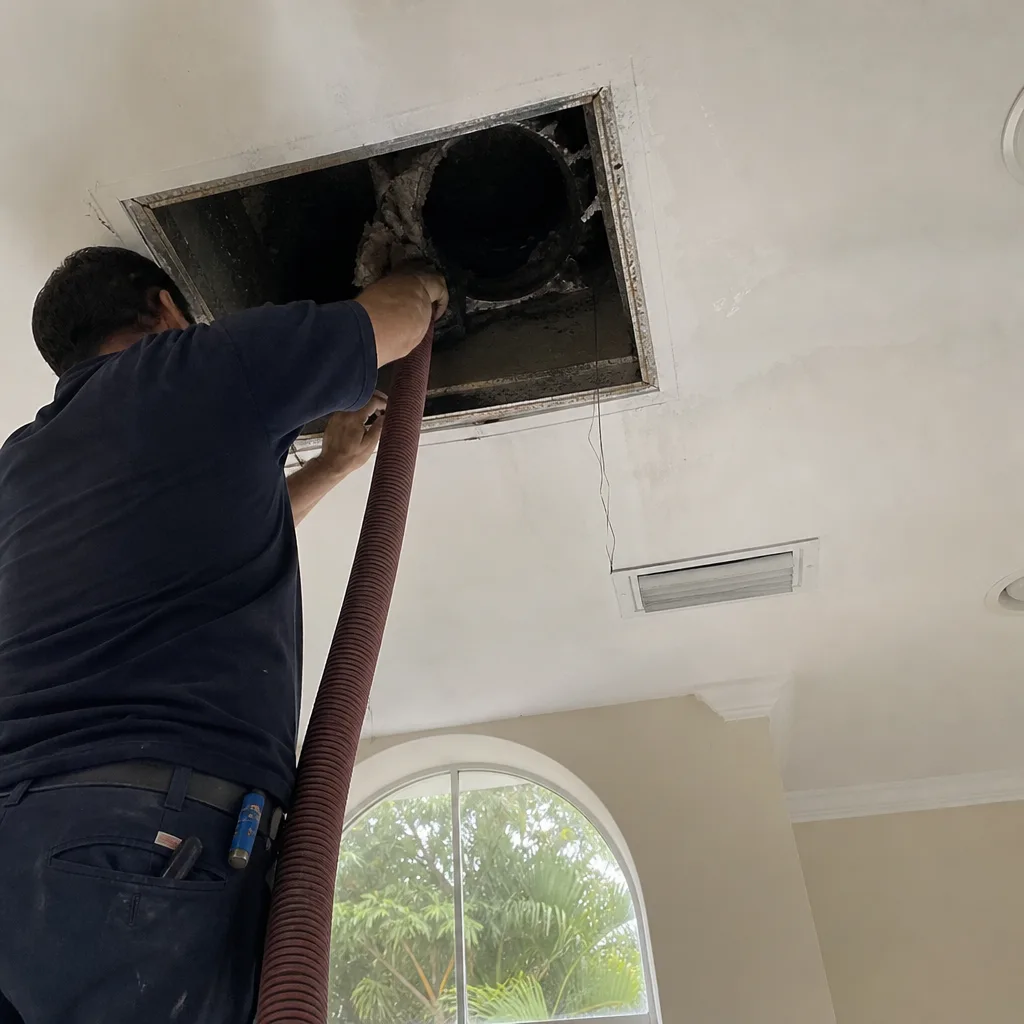 Before
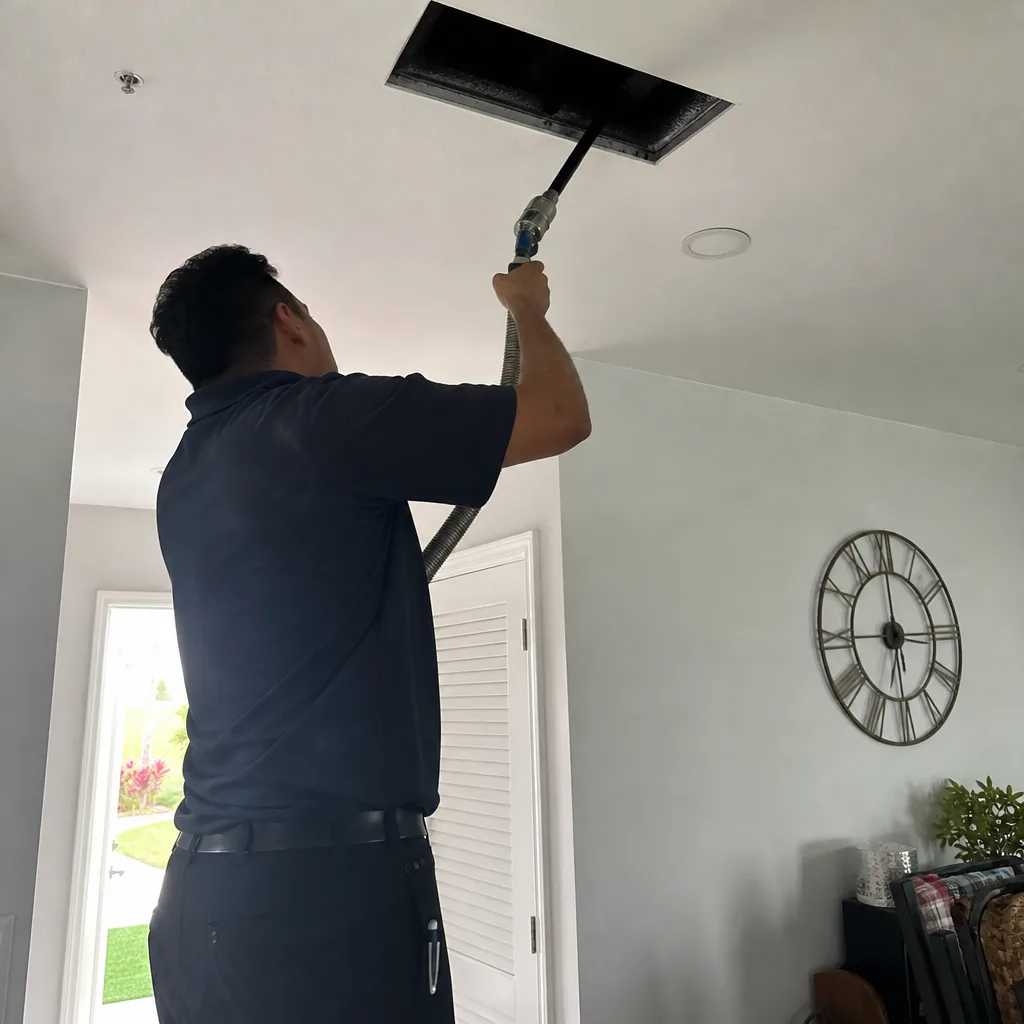 After
After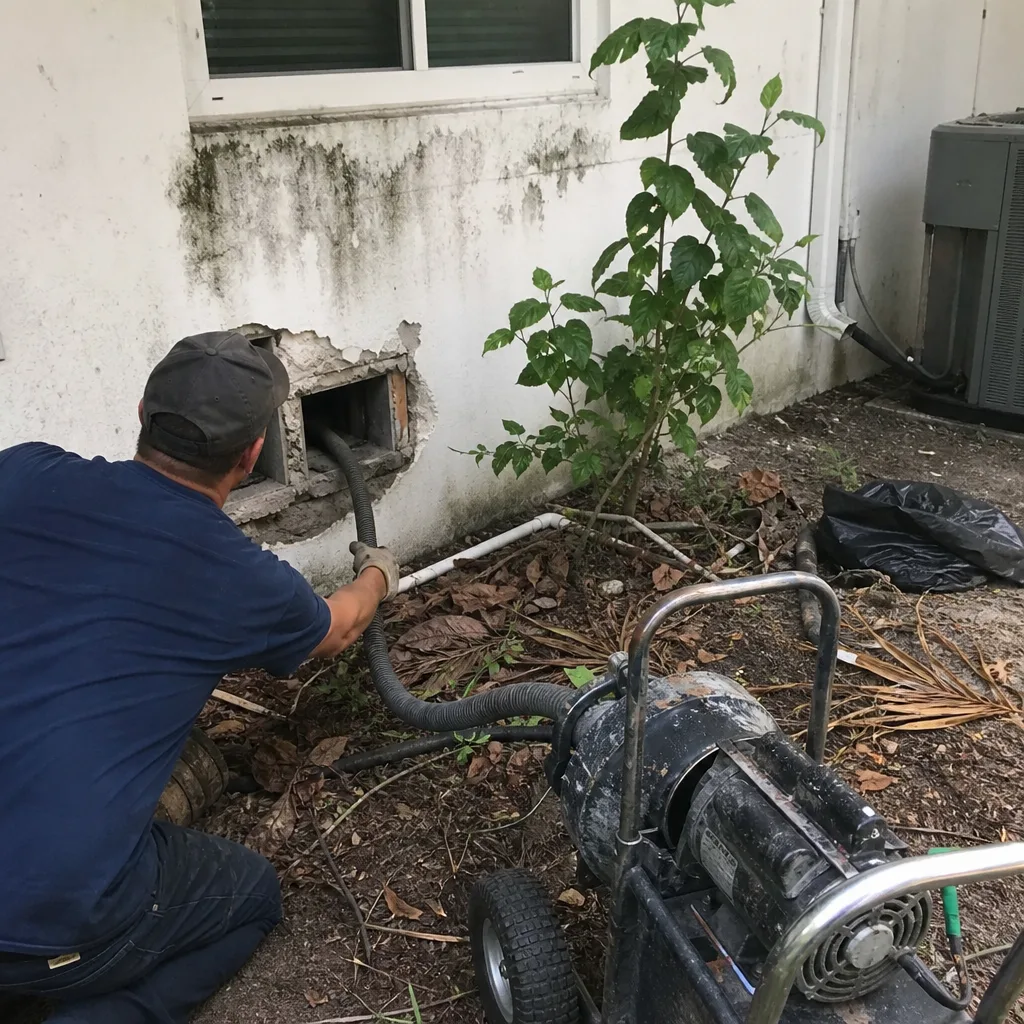 Before
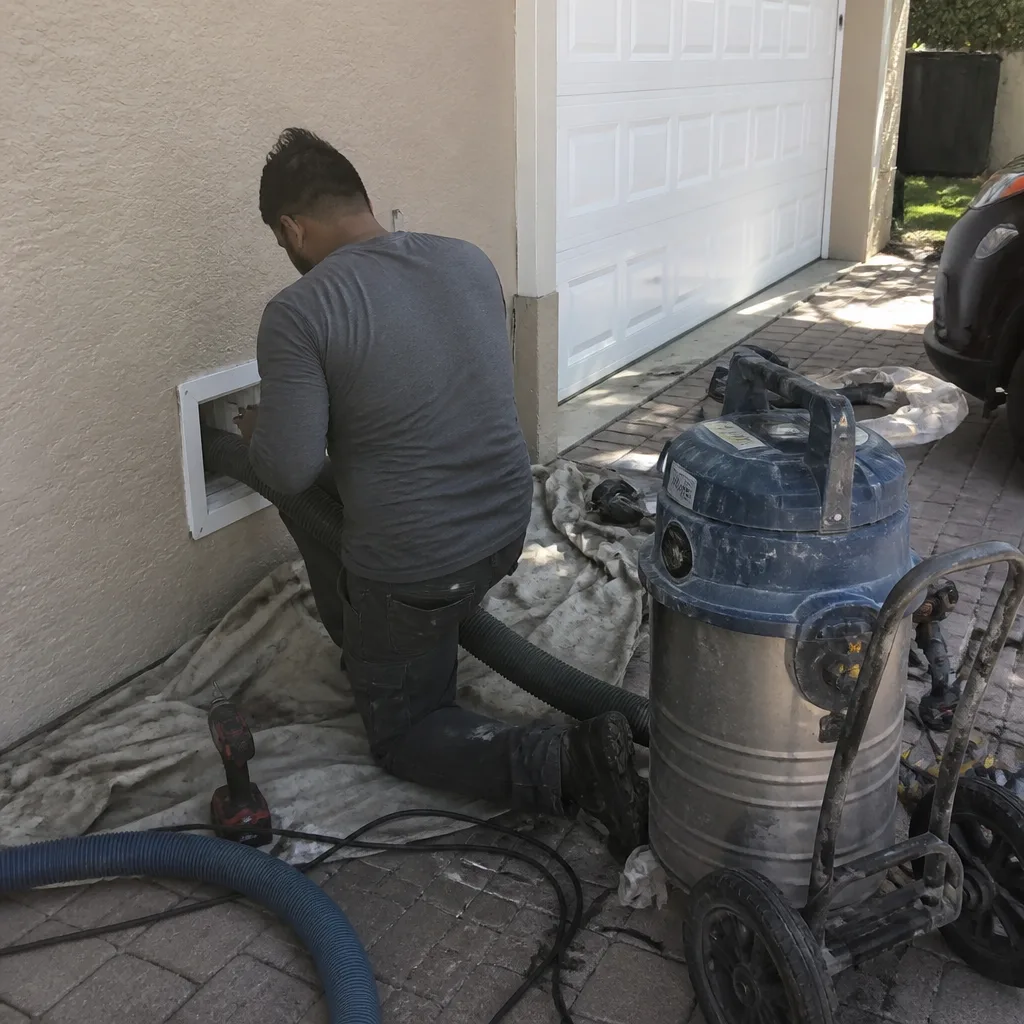 After
After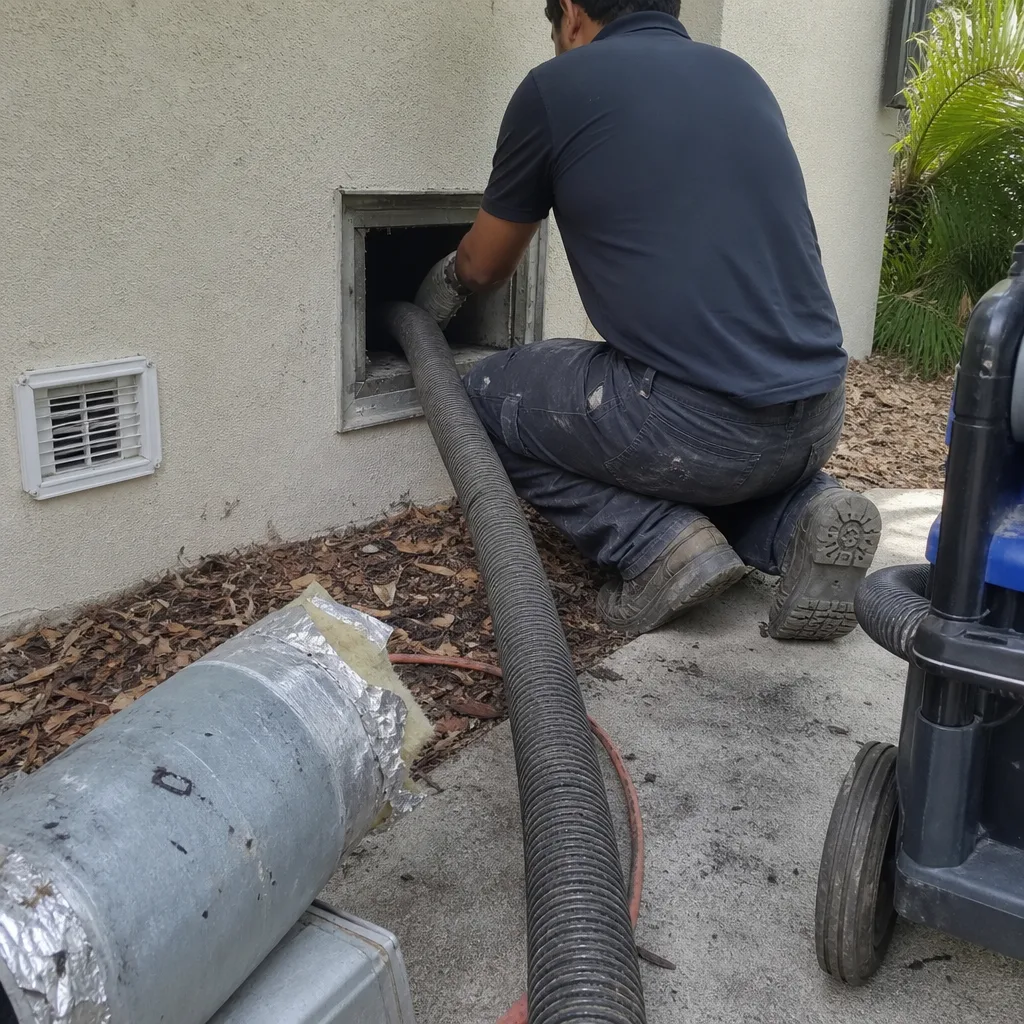 Before
 After
AfterWhen to Call a Professional
Call a professional when you see visible dust blowing from your registers during the first seconds of a cycle, when a musty or stale odor persists after replacing the filter, when allergies worsen specifically at home, or when you have experienced any of the three Fort Lauderdale triggers described above: a hurricane or tropical storm that affected your property, a renovation that produced dust, or a vacancy period of more than two months during the humid season. If you are not sure whether your system needs cleaning, a camera inspection answers the question definitively. Kestrel Air Duct Fort Lauderdale offers free estimates in Fort Lauderdale. Call (754) 354-9798 and a live person answers, any time of day.
Frequently Asked Questions
In Fort Lauderdale, air ducts should be professionally cleaned every 2 to 3 years, compared to the 3 to 5 year interval recommended for drier, cooler climates. The compressed schedule reflects year-round AC runtime and coastal humidity, which together cause faster accumulation of adhered contamination on duct walls. If you have pets, live within two miles of the coast, or have recently renovated, clean every 18 to 24 months. Call (754) 354-9798 and we’ll inspect your system and tell you honestly whether it is due.
Air duct cleaning in Fort Lauderdale typically costs between $425 and $1,100 for a whole-home system, with most single-family homes falling between $575 and $825. The honest price depends on home size, vent count, number of HVAC systems, and the degree of contamination. Any quote below $400 for a whole home should be treated as a starting price, not a final number. For an exact quote before any work begins, call (754) 354-9798.
Cheaper quotes in the Fort Lauderdale market come almost exclusively from companies running shop vacuums rather than negative-air extraction equipment, and from companies that quote a low base price and add per-vent charges at the door. Professional-grade equipment like Rotobrush brush systems and Abatement Technologies HEPA-filtered negative-air units costs real money to own and operate. A company charging $129 for a whole home cannot be running that equipment. The low price is a down payment on a larger invoice.
The only way to verify duct cleaning is through camera inspection. A legitimate company shows you before and after photos of the same duct sections, including the walls of the duct, not just the floor. The after photos should show the salt-and-dust film removed. Airflow measurements before and after add useful confirmation. At Kestrel Air Duct Fort Lauderdale, every job includes camera verification, and the photos are yours to keep. Call (754) 354-9798 to schedule.
Duct cleaning removes the adhered organic material and salt-humidity film inside ductwork that produces musty odors, particularly in Fort Lauderdale homes that have sat vacant during the humid season. If the odor originates in the ducts or the air handler, professional negative-air extraction cleaning addresses it directly. If the odor persists after cleaning, the source may be elsewhere, such as the drain pan or evaporator coil, and a thorough technician will investigate rather than claim the problem is solved. Call (754) 354-9798 and describe what you’re smelling and when.
Yes. Every Kestrel Air Duct Fort Lauderdale job operates under the Kingswell Guarantee, which includes a written price before work begins, a defined arrival window, a clean job site, and a written 365-Day Done Right Promise. If the work falls short within the guarantee period, Kestrel returns and makes it right at no charge. The guarantee is documented in writing on every single job. Call (754) 354-9798 for a free estimate and a written scope of work.
The Bottom Line
Air duct cleaning in Fort Lauderdale is not a generic maintenance item. The salt air, 80% humidity, and year-round AC runtime create contamination conditions that national advice does not address. Fort Lauderdale homeowners should expect a legitimate whole-home cleaning to cost between $425 and $1,100, to take four to six hours, and to be documented with before and after camera images and airflow measurements. The written quote should be a flat price for the whole system, provided before work begins. A professional cleaning with negative-air extraction and rotary brush agitation resets your system and removes what years of coastal air have deposited inside. For a free estimate and a written scope of work in Fort Lauderdale, call (754) 354-9798.
Written by Dale Whitmore, Owner at Kestrel Air Duct Fort Lauderdale, serving Fort Lauderdale since 2004.